
Norway
Best Time to Go Rock Climbing in Norway
Month-by-month conditions, temperatures and rainfall for planning a climbing trip to Norway.
Norway's Climbing Calendar: Month-by-Month Guide
| Data type | Jan | Feb | Mar | Apr | May | Jun | Jul | Aug | Sep | Oct | Nov | Dec |
|---|---|---|---|---|---|---|---|---|---|---|---|---|
| Popularity | 1 out of 10 | 1 out of 10 | 4 out of 10 | 7 out of 10 | 10 out of 10 | 8 out of 10 | 10 out of 10 | 10 out of 10 | 6 out of 10 | 3 out of 10 | 1 out of 10 | 1 out of 10 |
| Temperature (°C) | -3° | -3° | 0° | 4° | 10° | 14° | 16° | 15° | 11° | 6° | 1° | -2° |
| Rain | ☀️ | ☀️ | ☀️ | ☀️ | ☀️ | ☀️ | ☀️ | ☀️ | 🌧️ | 🌧️ | 🌧️ | ☀️ |
| Rainfall (mm) | 50mm | 40mm | 50mm | 45mm | 55mm | 70mm | 80mm | 90mm | 90mm | 100mm | 70mm | 65mm |
Color Key:
Red: Hot temperature, chance of rainfall, or unfavorable conditions
Yellow: Moderate conditions
Green: Popular with climbers, ideal temperature, low rainfall, or favorable conditions
Blue: Cold temperature
🌧️ Indicates chance of rain, ☀️ indicates low chance of rain
Popularity: Red (1-5) - Fewer visitors, Yellow (6) - Moderate, Green (7-10) - Peak season, best time to meet other climbers
If you think something is wrong, please contact us at [email protected]
Norway's Climbing Seasons: Top Crags by Season
Norway offers a diverse range of climbing experiences throughout the year. Each season brings unique weather conditions that influence the best climbing destinations. Here, we list the top crags in Norway for each season.
Spring: April-May
Summer: June-August
Fall: September-October
Winter: November-March
Norway's varied climbing opportunities and stunning landscapes make it a top destination for climbers. The best seasons for rock climbing in Norway are spring and autumn, with summer being suitable for those who prefer warmer weather and don't mind the crowds. Winter is generally not ideal for outdoor climbing due to the cold and snowy conditions. Plan your trip according to the weather and your climbing preferences for an unforgettable adventure.
How long can you stay in Norway?
Norway is in the Schengen Area, so most visa-free visitors get 90 days in any rolling 180-day window. The window moves with you — a spring trip to another Schengen country comes out of the same 90 days, so a long autumn season here can run you out sooner than you would expect.
Where to stay in Norway
Once you have picked your month, the next question is usually where to base yourself. Prices in the good season move quickly, so it is worth looking early.
Getting around Norway
The train is the easy way between cities. You can book trains here.
Most crags are outside town, so a car is the most efficient way to reach them. You can compare car rentals here.
Mobile data in Norway
An eSIM gives you mobile data as soon as you land, with no SIM shop and no roaming bill. You install it on your phone before you fly and keep your own SIM for calls and texts. Saily covers Norway, and the small plans cost a few dollars. Check that your phone supports eSIM first.
Insurance that covers climbing
Most standard travel policies exclude rock climbing, and a lot of them exclude riding a scooter too. Check your own policy first — and if it does not cover you, this is the one I use.
- Covers rock climbing, which most standard travel policies exclude
- Buy it after you have already left home, and extend it monthly if you stay in Norway longer
- Emergency medical cover and evacuation, which is the part that actually matters
Some links on this page are affiliate links, marked as sponsored. If you book through them it costs you nothing extra and helps keep this site free. I only recommend accommodation and insurance I would use myself, and always read the policy wording for your own activities.
Discover Your Next Adventure
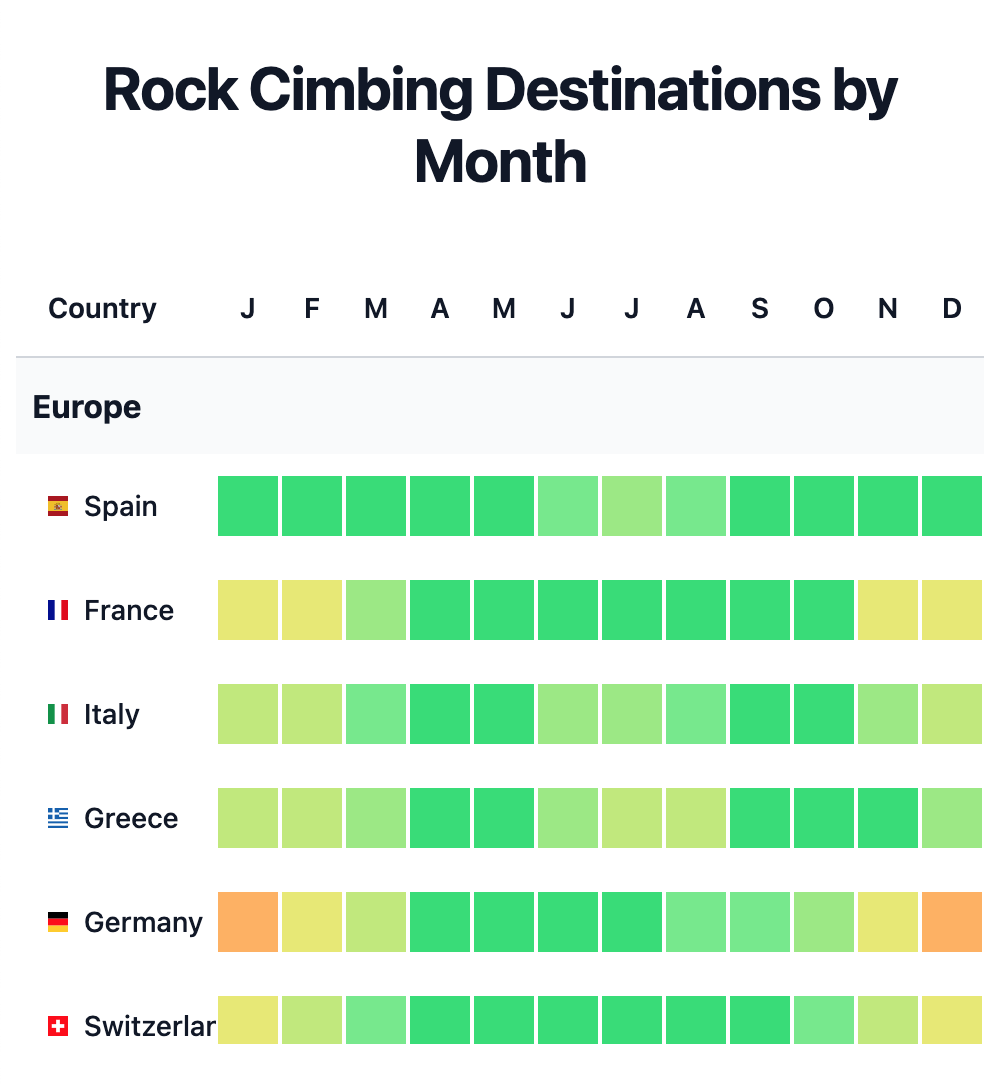
Curious about the best times to visit other climbing destinations? Explore our interactive tool to find popular countries for each month of the year!
Last updated: 2024-09-17
Written by Stephan Bochet