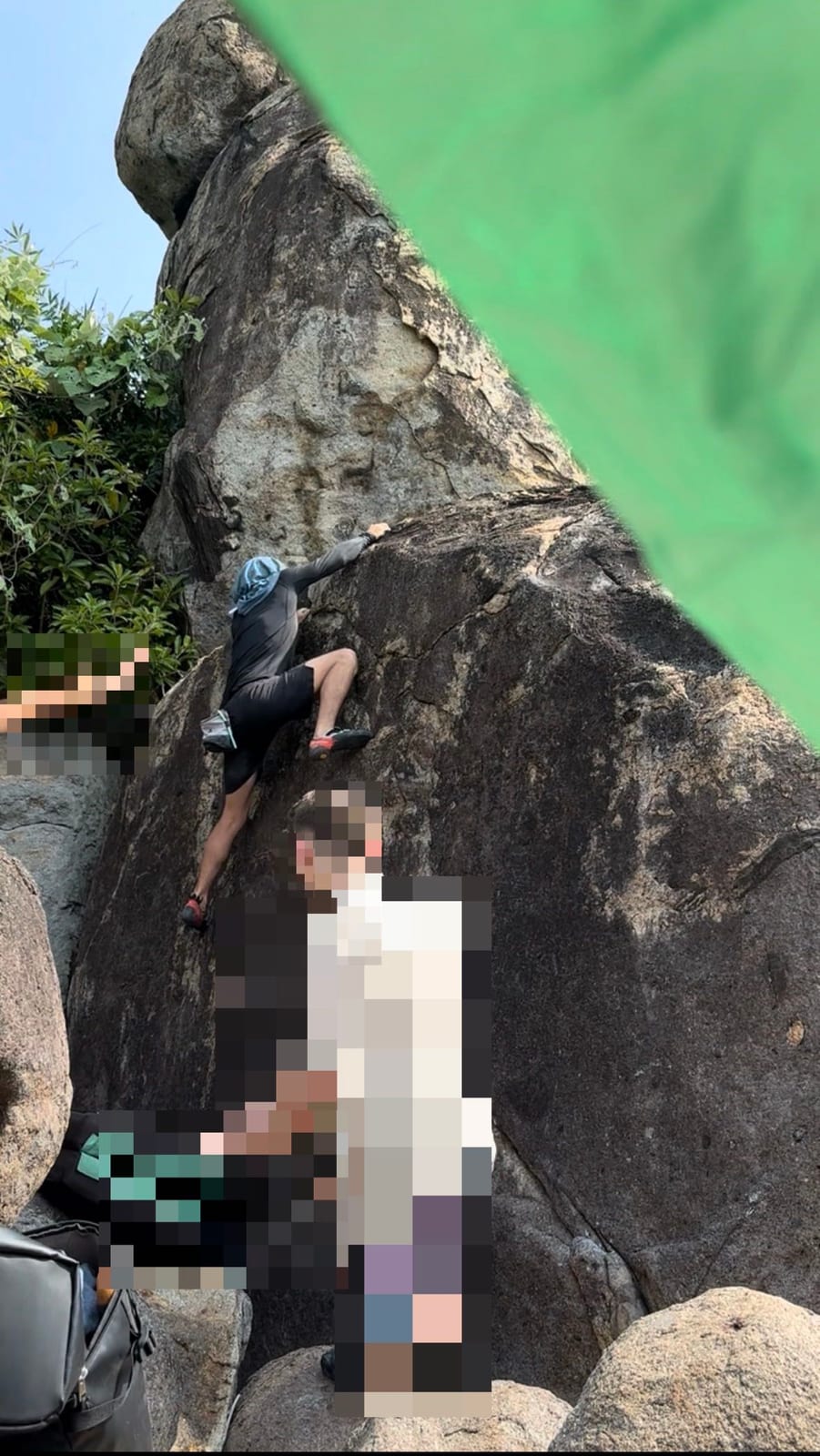
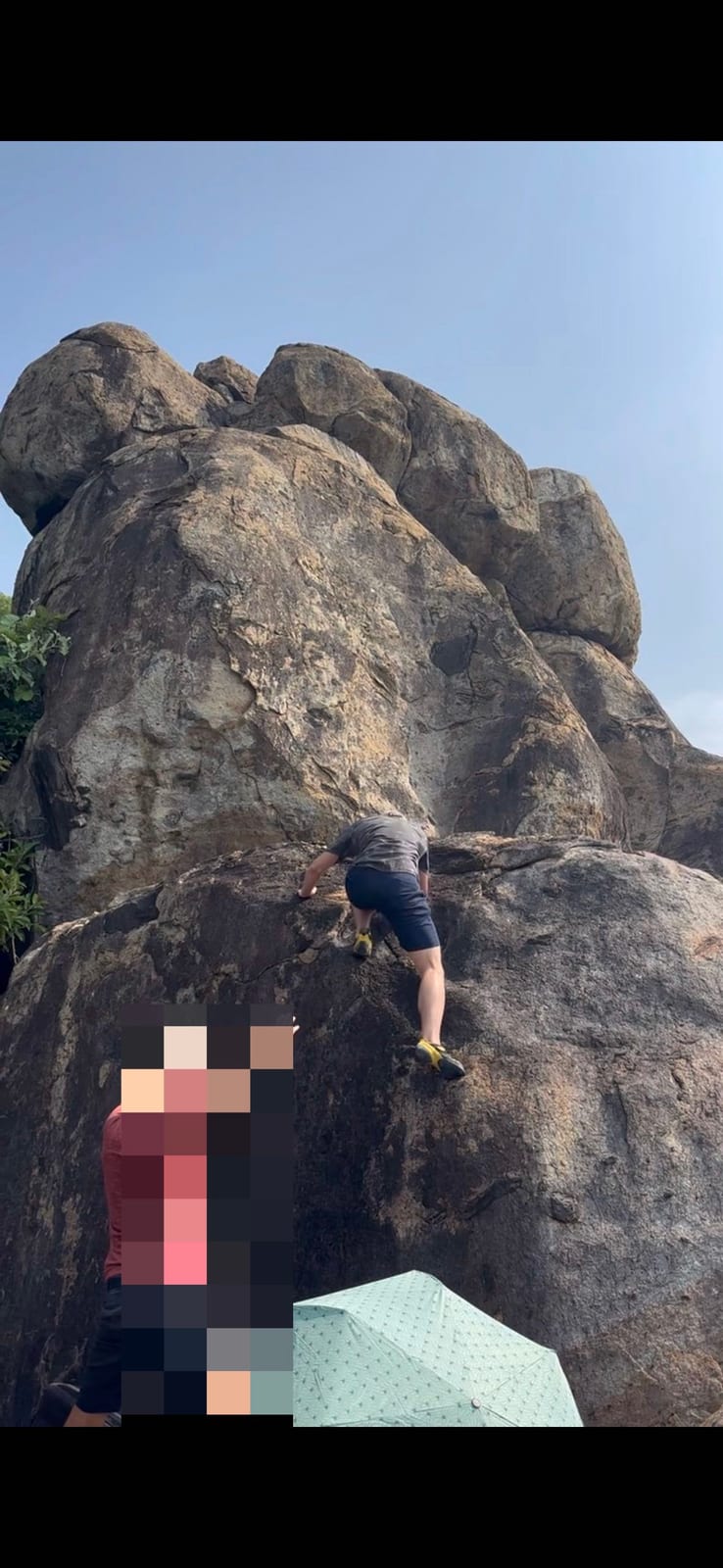
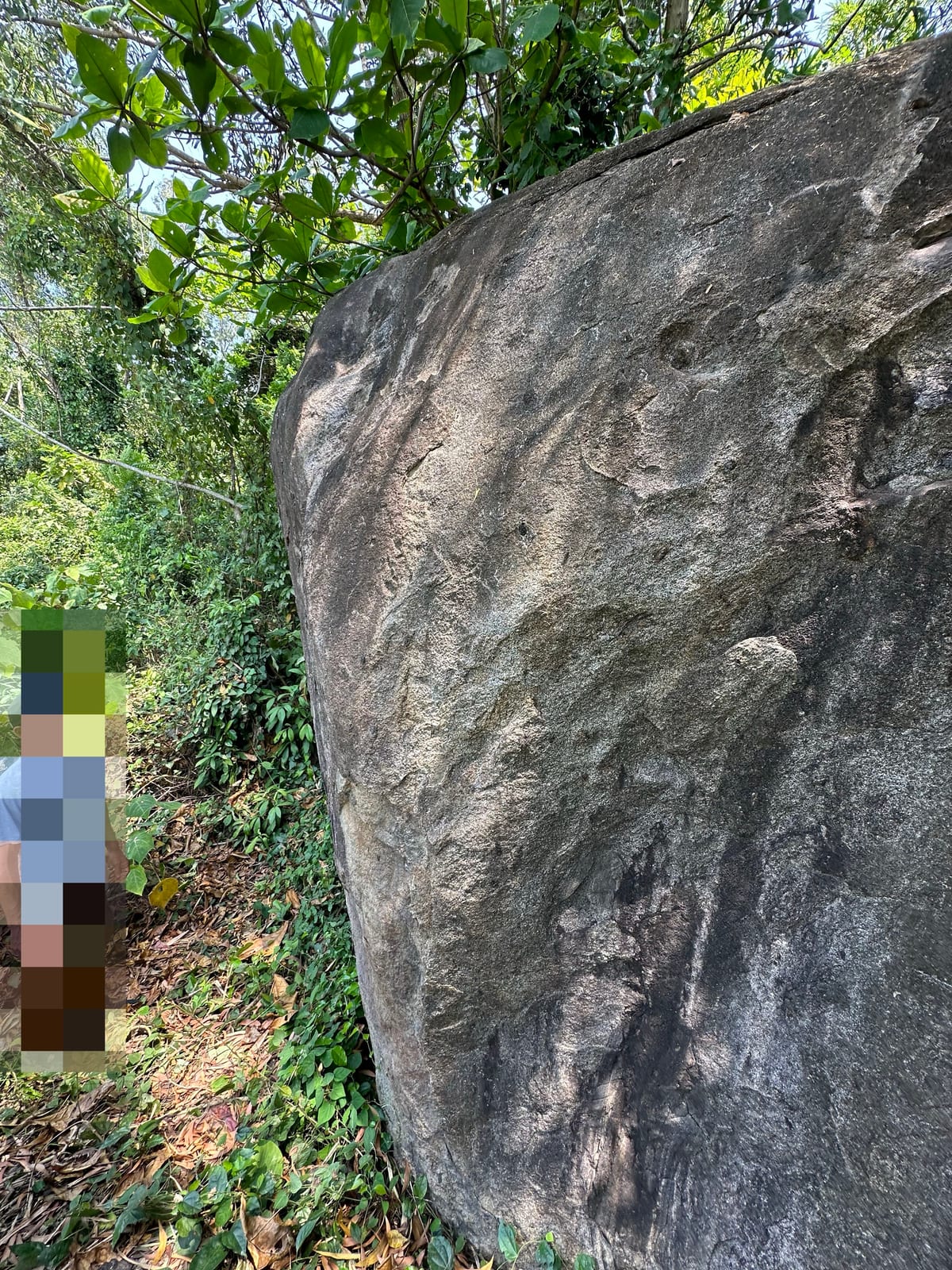
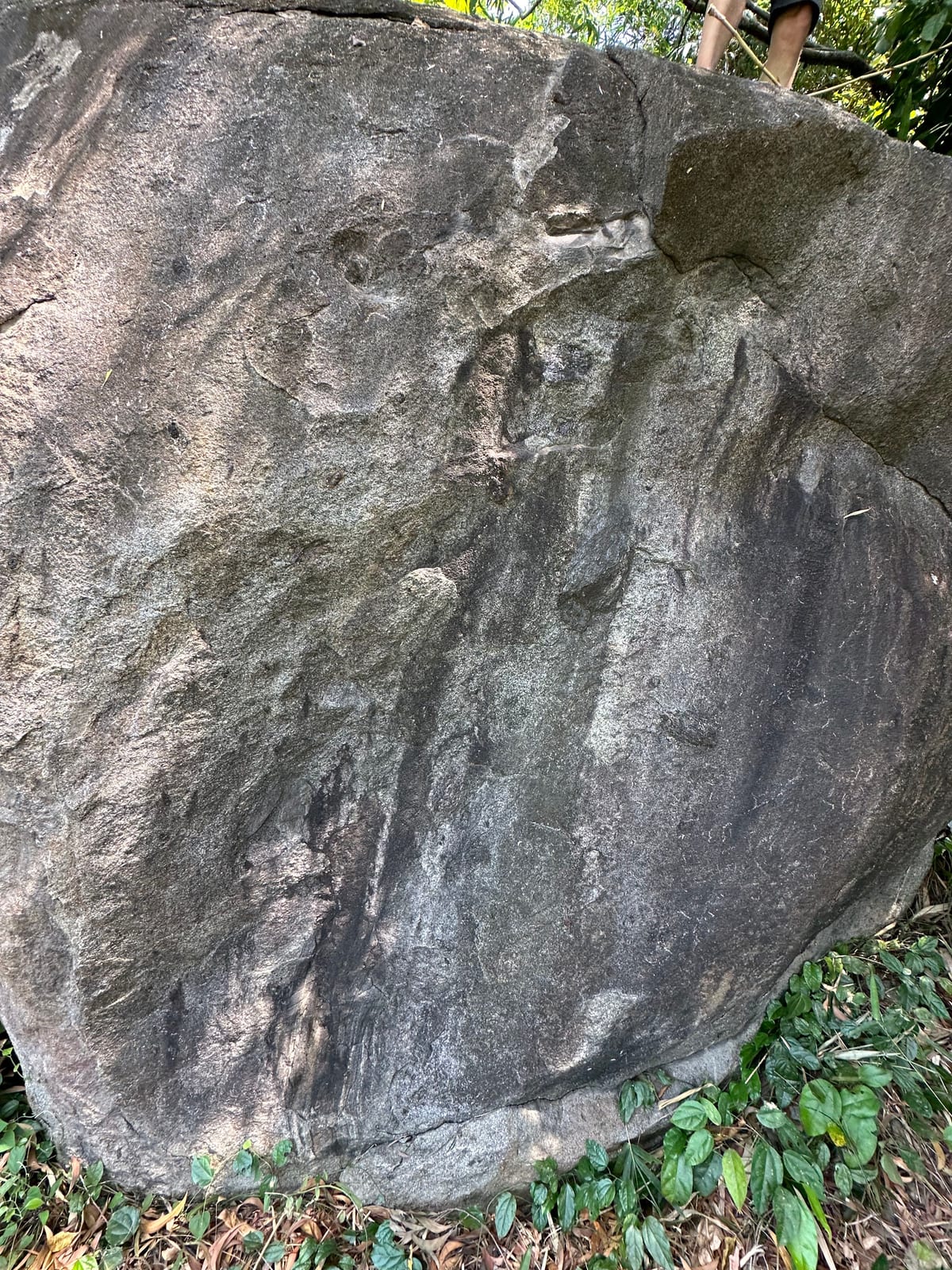
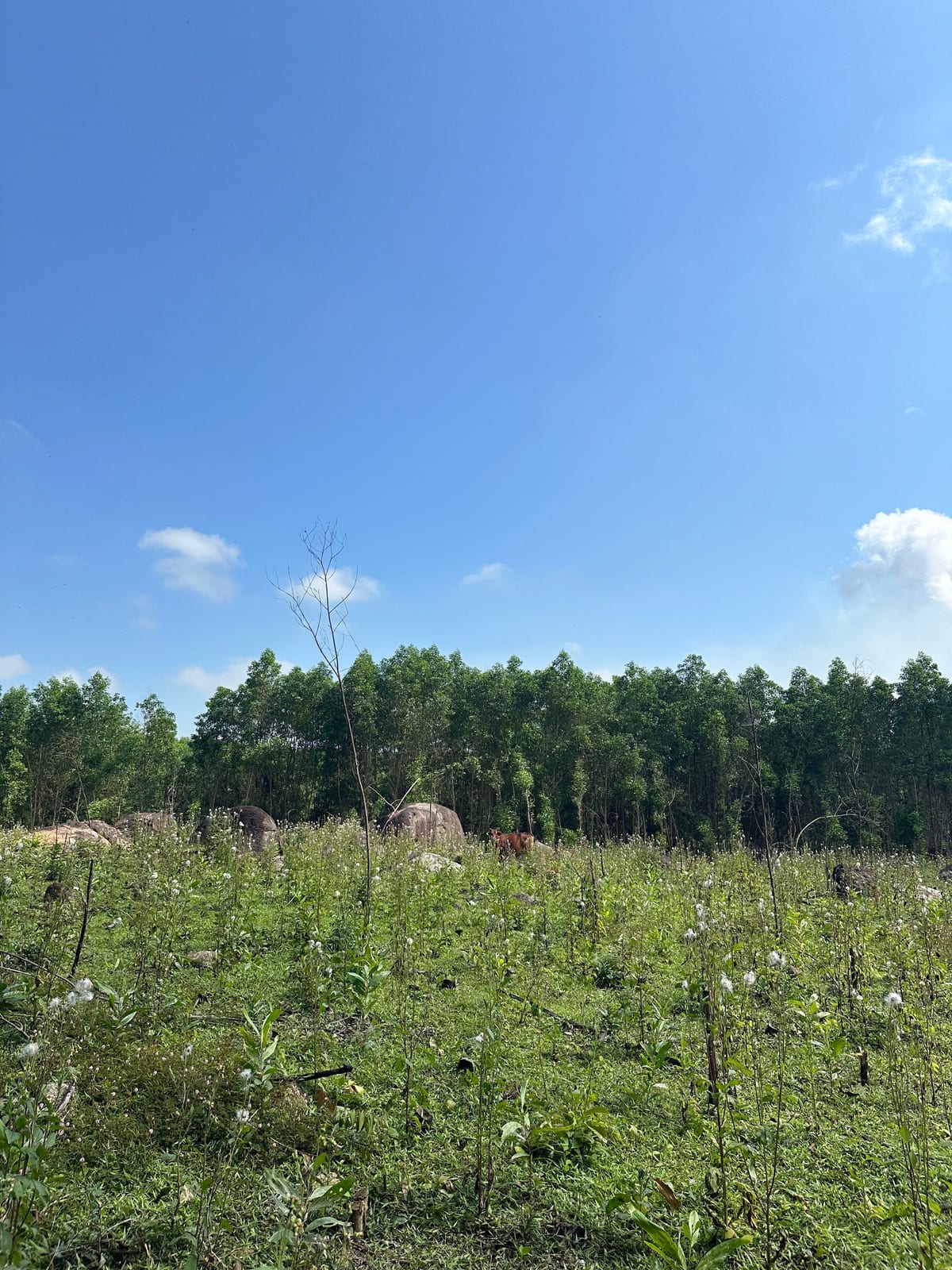
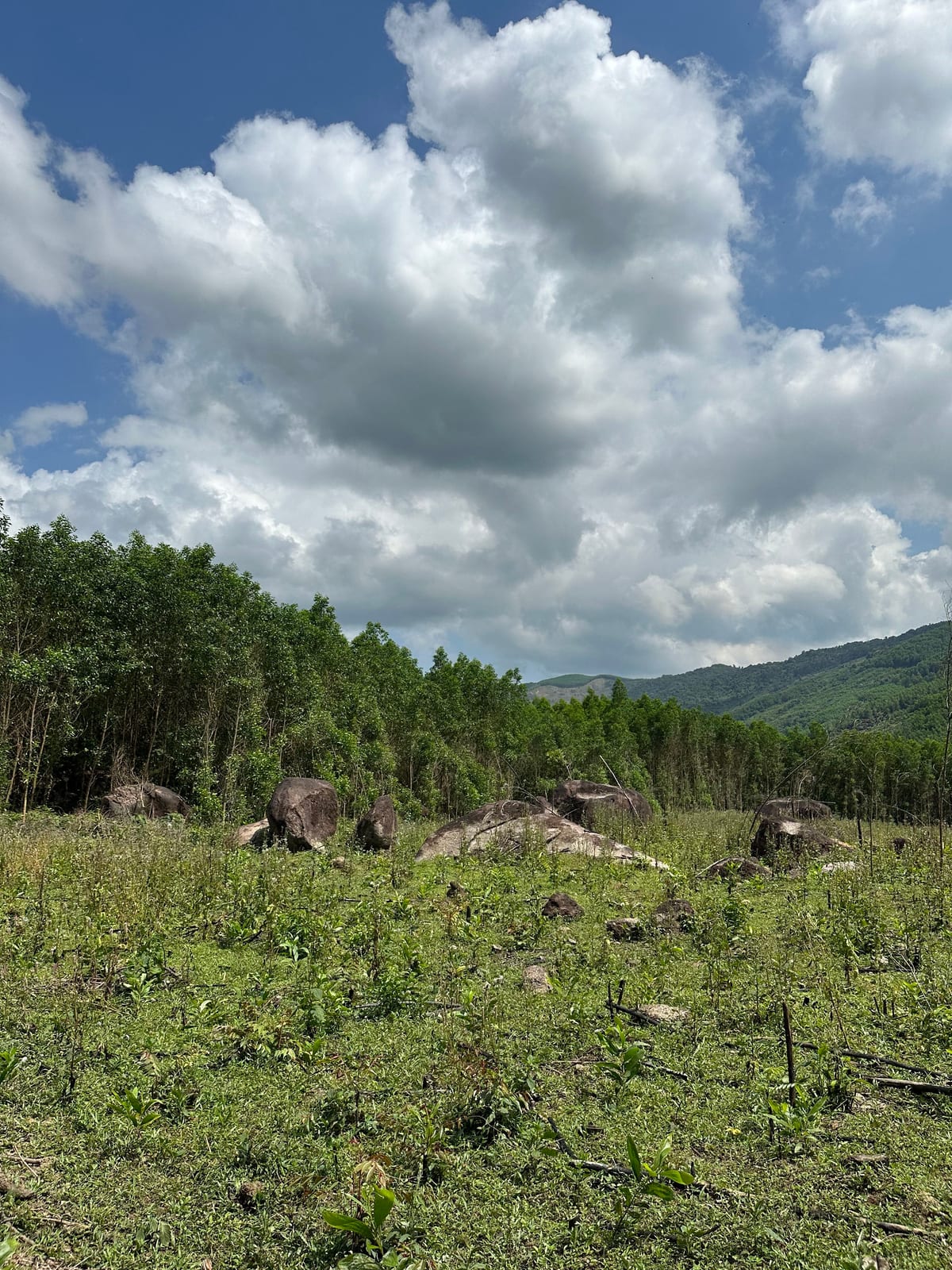
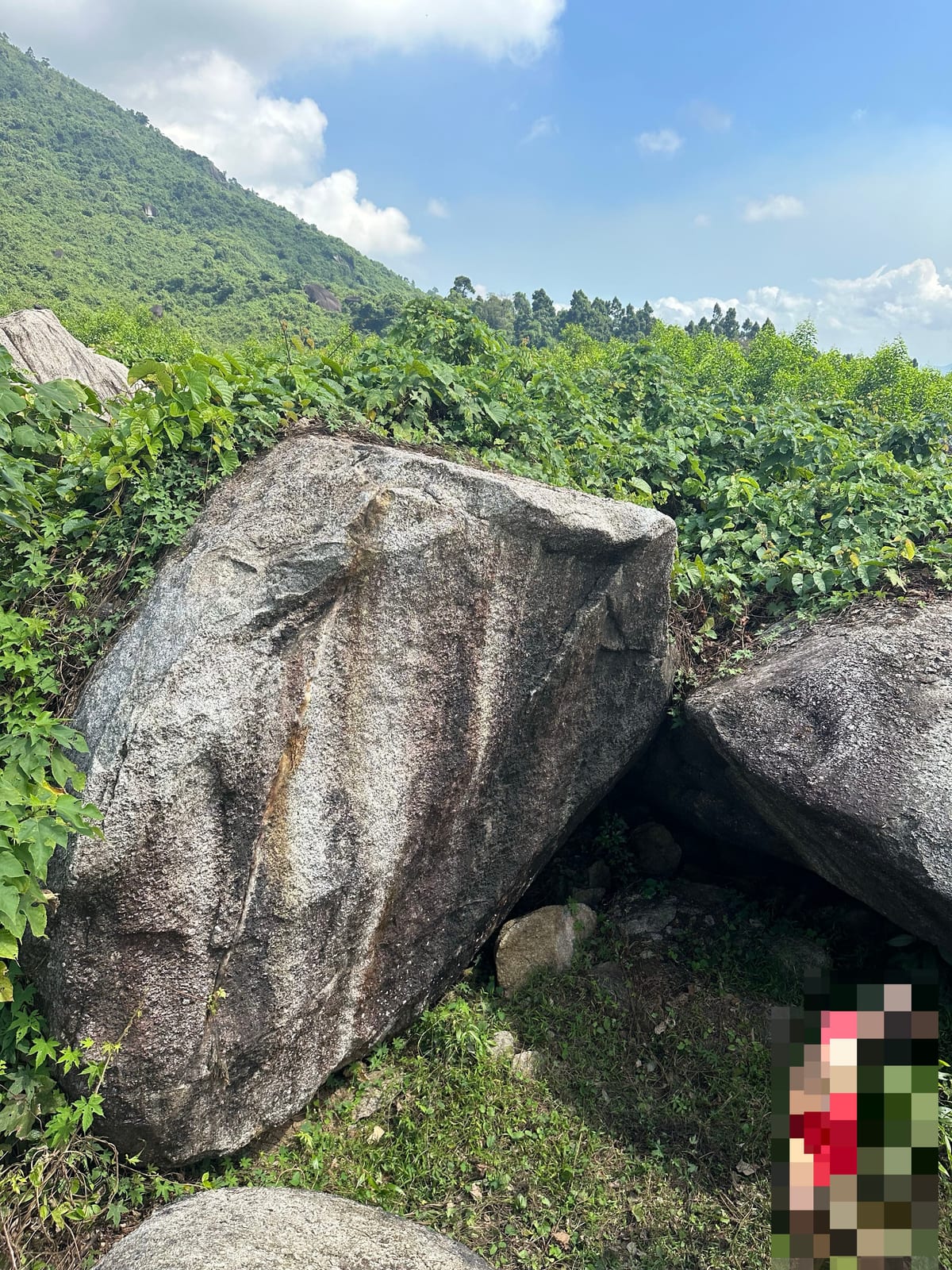
Everything you need for outdoor bouldering in Da Nang, Vietnam: the granite boulders of Son Tra and Ba Na Hills, the beach boulders on the Hai Van Pass, the crowdsourced topo map, crash pads, climbing gyms, seasons, transport and rest days. Da Nang is a bouldering destination with no outdoor lead or top rope climbing.
Rock climbing and bouldering in Da Nang, Vietnam 2026
Da Nang is central Vietnam's beach city and an up and coming digital nomad and tourist destination, with a rapidly expanding outdoor bouldering scene. The granite is spread across the Son Tra peninsula, the hills below Ba Na, the beaches under the Hai Van Pass, the Cu De river and Cu Lao Cham island. Most of it has been developed in the last few years by a small crew of local and expat climbers, and a lot of rock is still undiscovered.
The boulders are 20 to 60 minutes from the city, transport is cheap, the beach is in the middle of town, My Khe has beginner-friendly surf, and Hoi An and kitesurfing are just to the south.
There are roughly 70 to 80 documented problems, most areas need cleaning, some boulders have never been climbed, and the beta lives on a crowdsourced topo map and in a Facebook group rather than in a guidebook.
Pros and cons
Pros
Cons
Beach, mountain and riverside boulders within an hour of the city
No outdoor lead or top rope climbing, those areas may be closed
Cheap and easy transport, boulders reachable by scooter
No crash pad rental in Da Nang yet
Rapidly growing scene with lots of first ascents still available
Rainy and typhoon season (roughly September to December) shuts a lot of it down
Great digital nomad city: cafes, coworking, food, beach
Many areas need cleaning and brushing before they are climbable
Surfing, Hoi An, waterfalls and swimming for rest days
Little shade in several areas, so early starts or late afternoons only
Two climbing gyms in the city plus a bigger gym being built
theCrag and topo apps are outdated for Da Nang; the crowdsourced community topo is the real source
Free to climb, small local parking fees at most
Monkeys at Son Tra and Ghenh Bang will steal food and gear
I. Why climb in Da Nang?
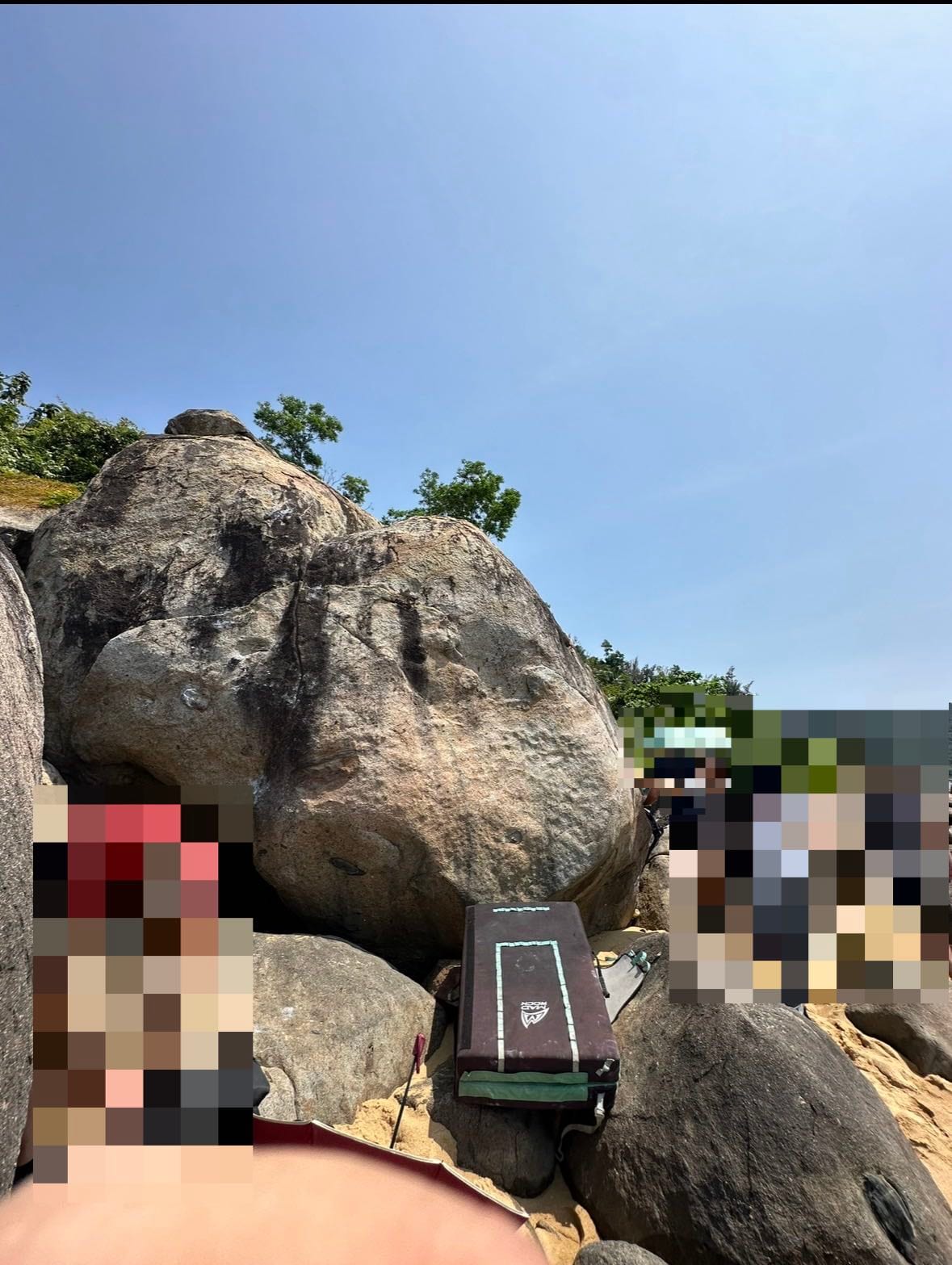
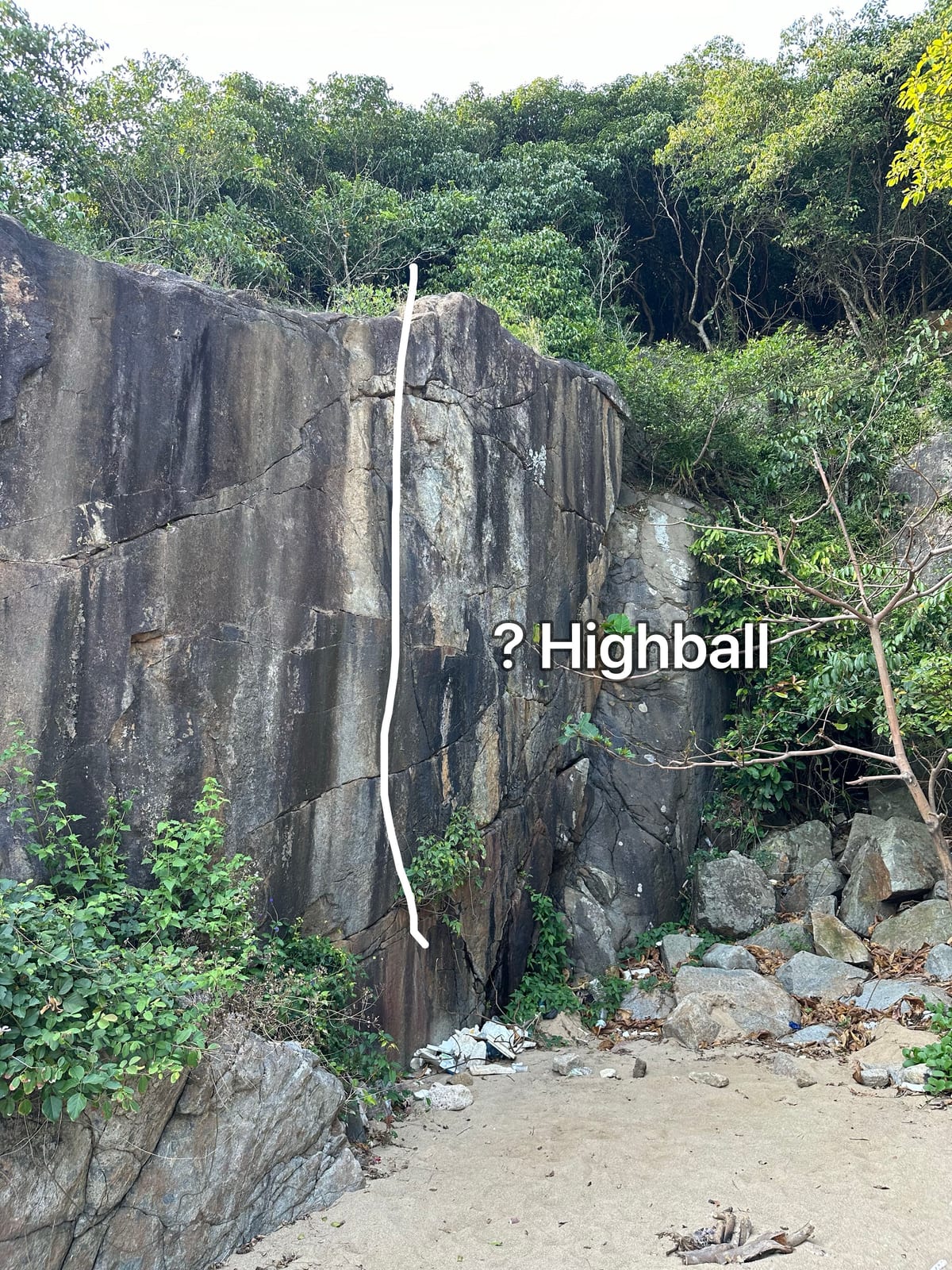
The rock is granite. Expect rounded beach boulders with slopers and mantels, blocky forest boulders with crimps and cracks, sharp crystals, sandy landings on the coast and softer forest landings inland. Problem heights run from low sit starts up to committing highballs like the Ghenh Bang highball wall and the Big Tower on the Hai Van Pass, which are documented but still unclimbed.
The developed areas split into five clusters: the Son Tra peninsula (Bai Xep, Bai Da, the Monkey Boulders, Son Tra Lake and Ghenh Bang), the Ba Na Hills forest and river boulders to the west, the beach boulder areas below the Hai Van Pass to the north, the Cu De and Khe Ram river boulders, and the outliers at Ngu Hanh Son (the Marble Mountains) and Cu Lao Cham island.
Description
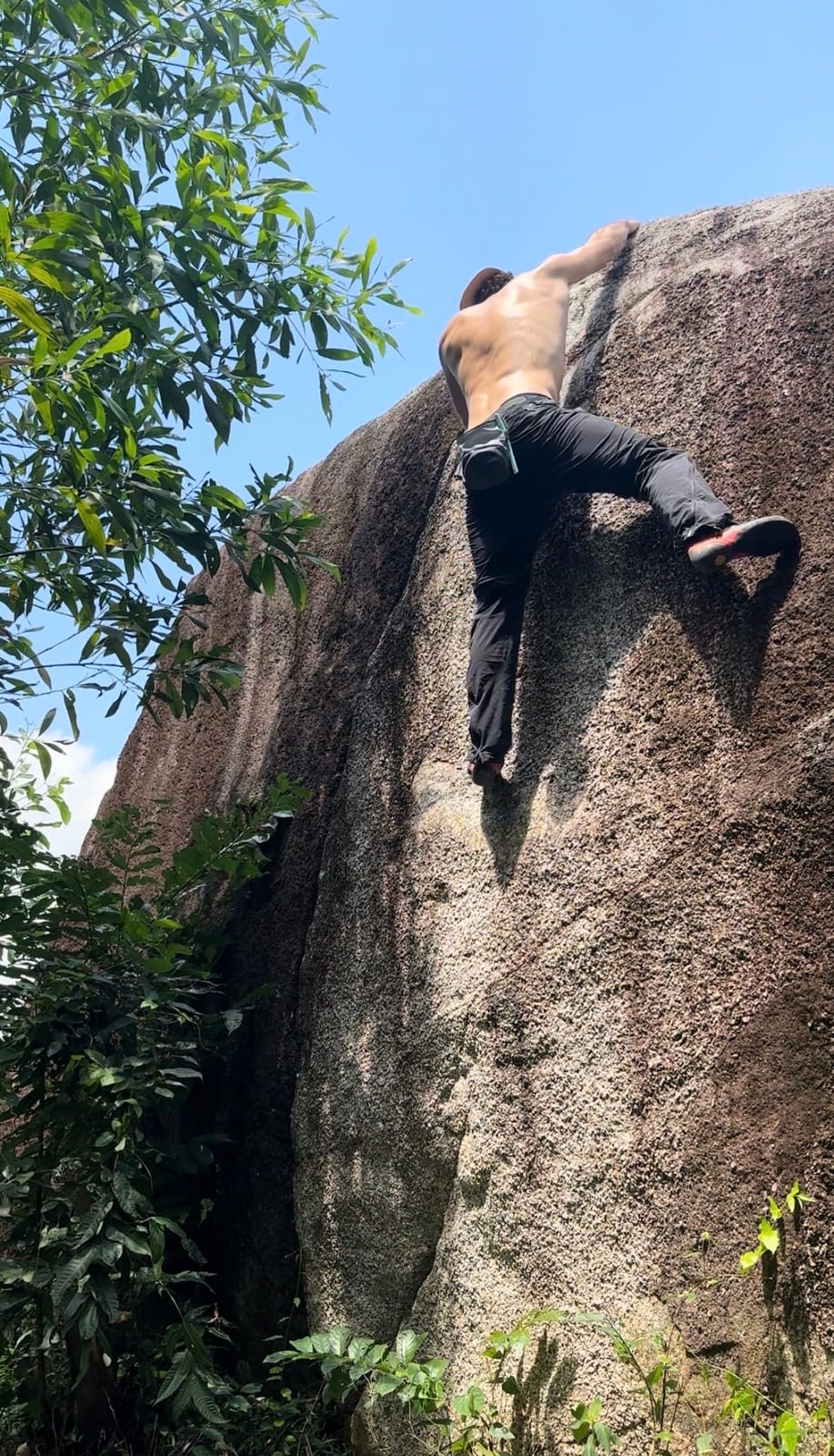
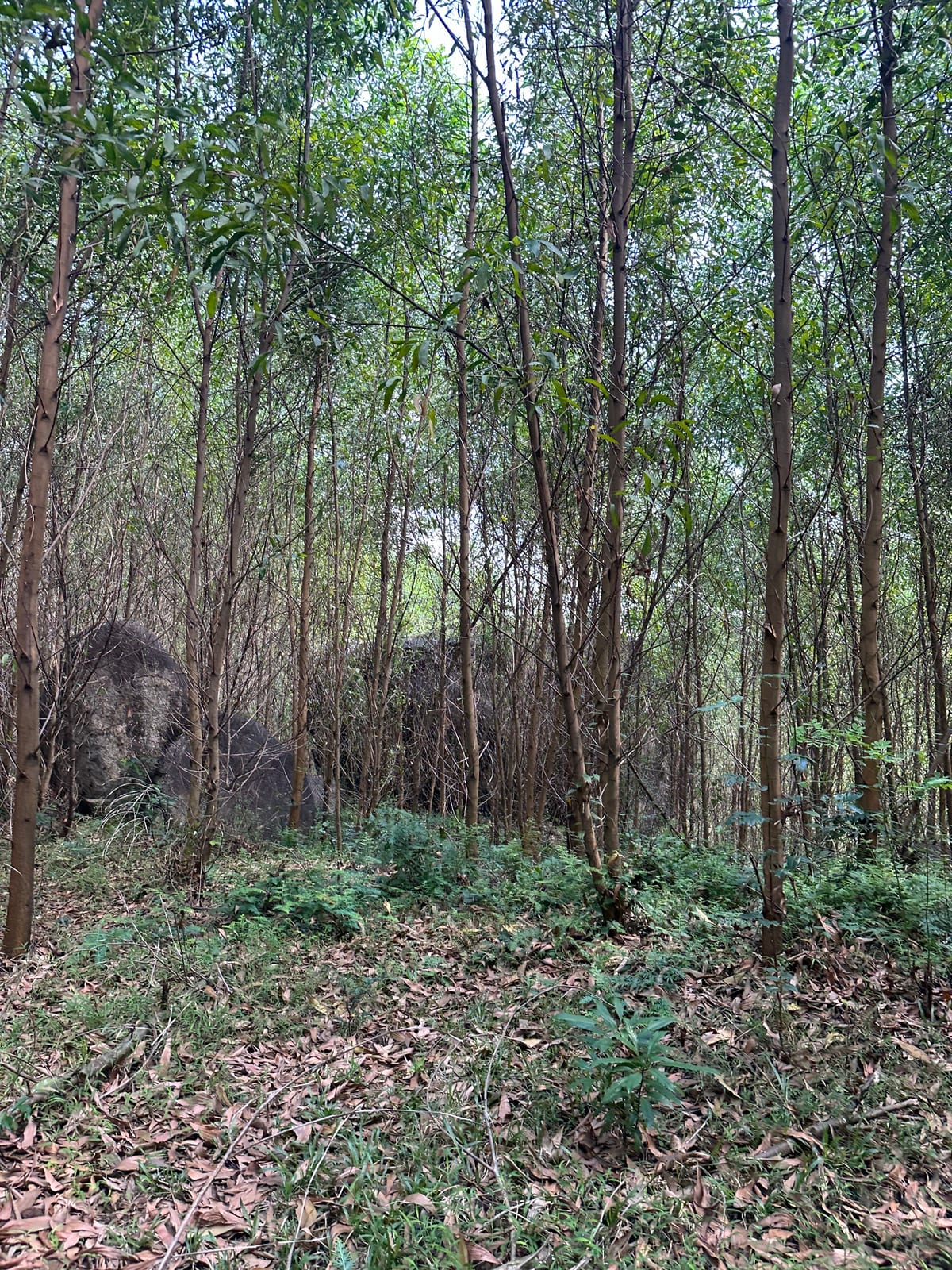
Granite in the Ba Na Hills forest west of Da Nang. The rock here is coarse and features cracks, crimps and big slabby faces.
Description
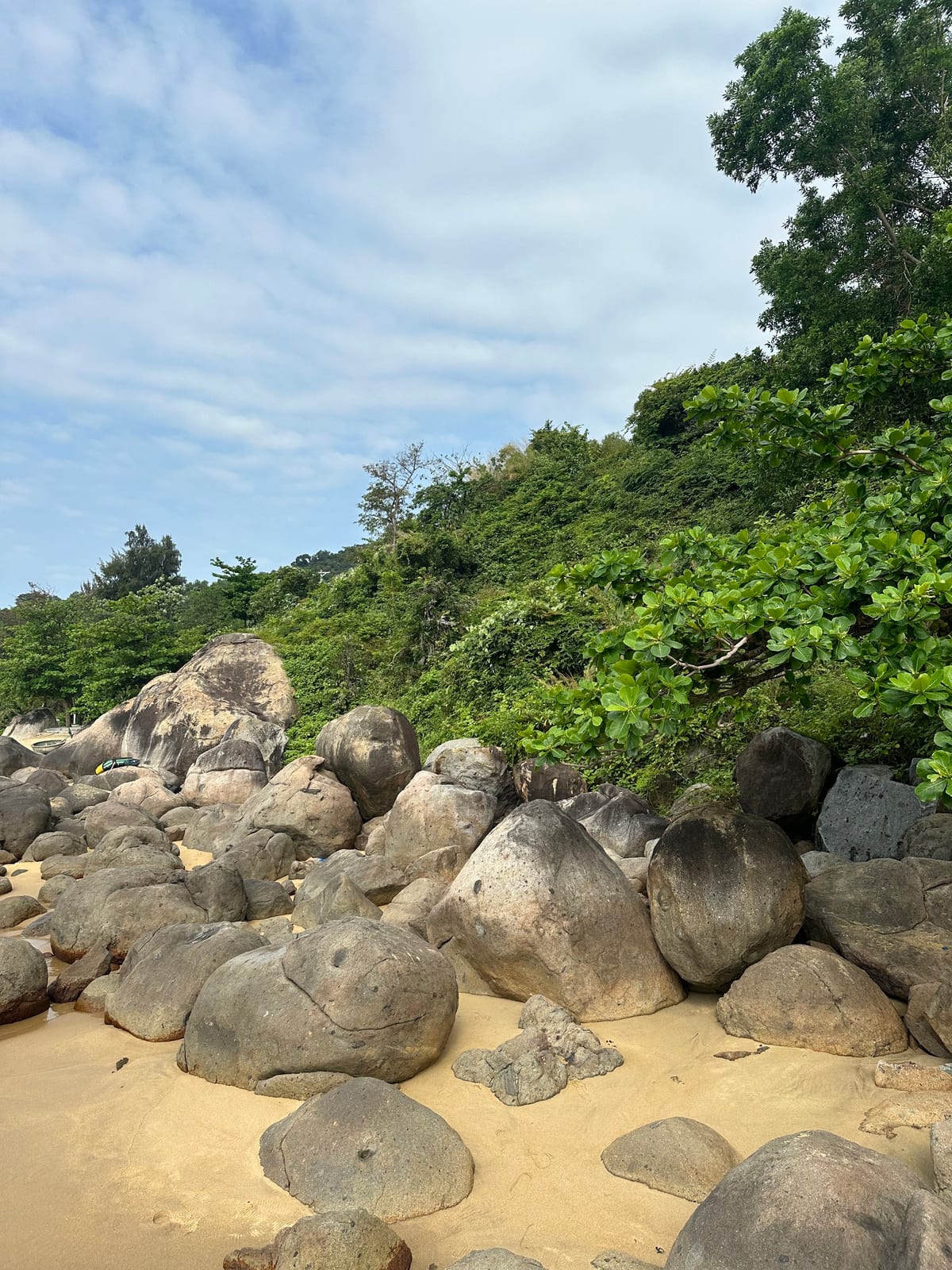
Bai Xep on Son Tra: rounded beach boulders sitting straight on the sand, the most developed area in Da Nang with around 25 problems.
Description
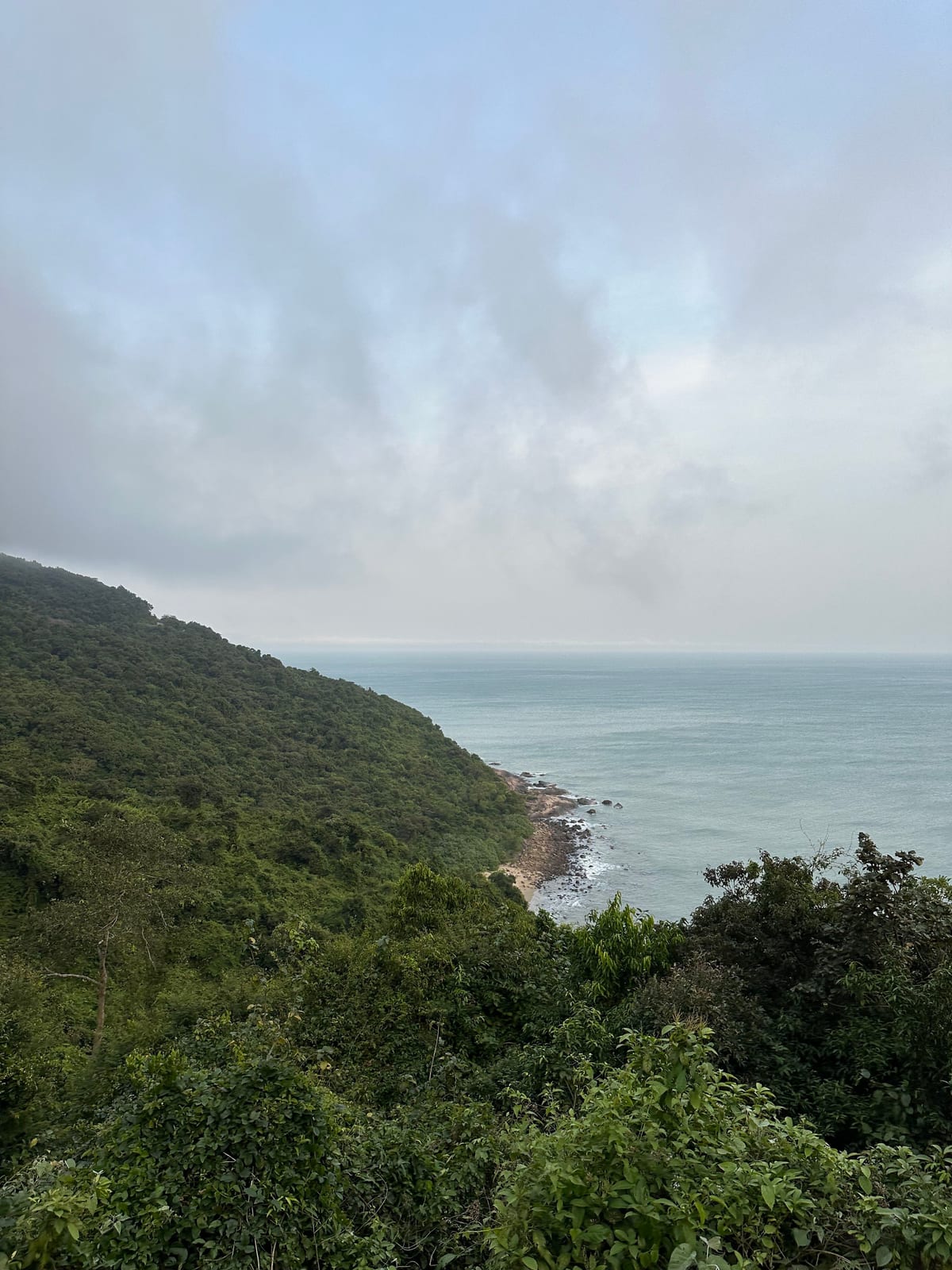
The Son Tra peninsula coastline on the way down to Ghenh Bang. Most Son Tra areas involve a short walk down from the road.
Description
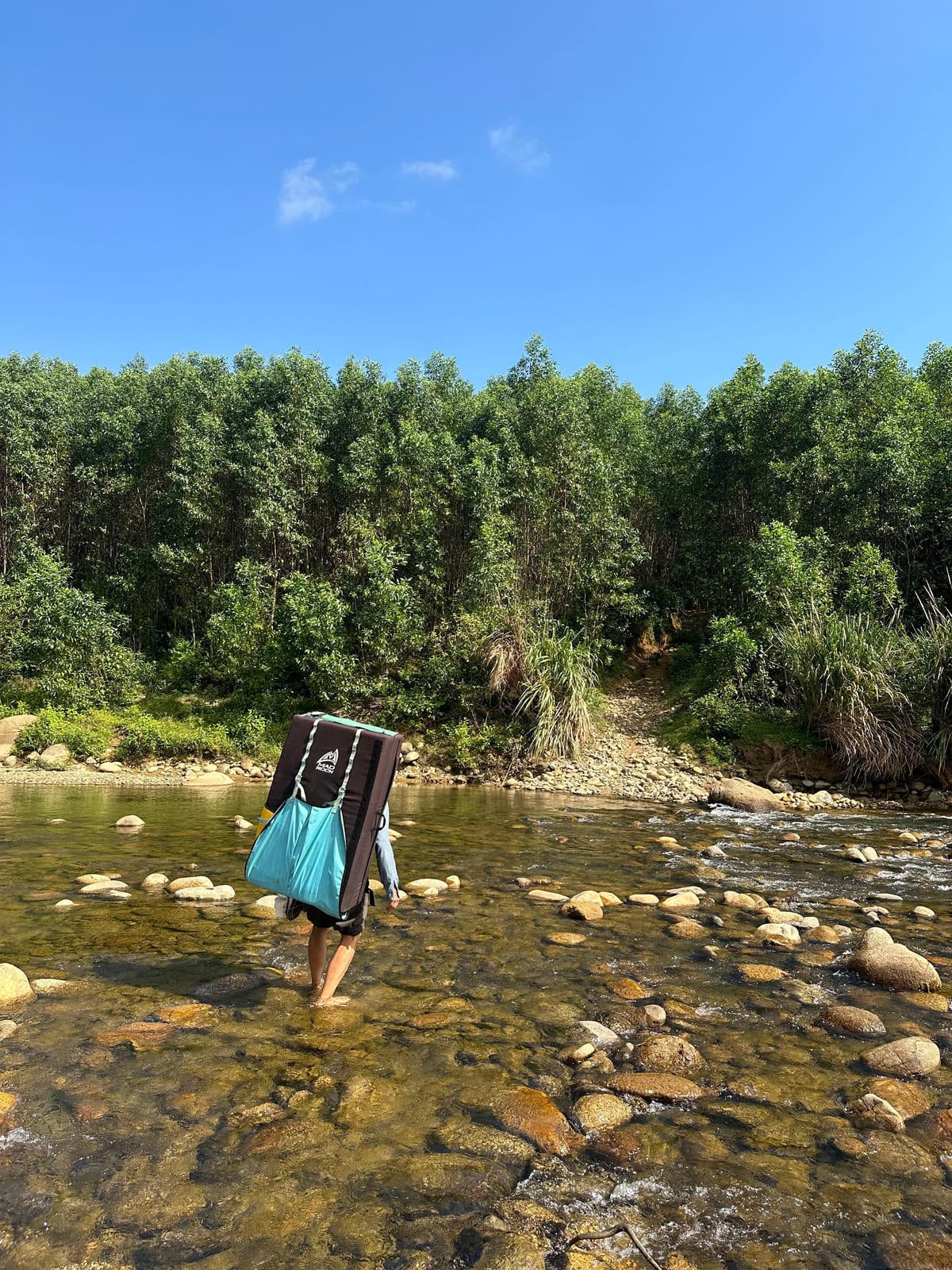
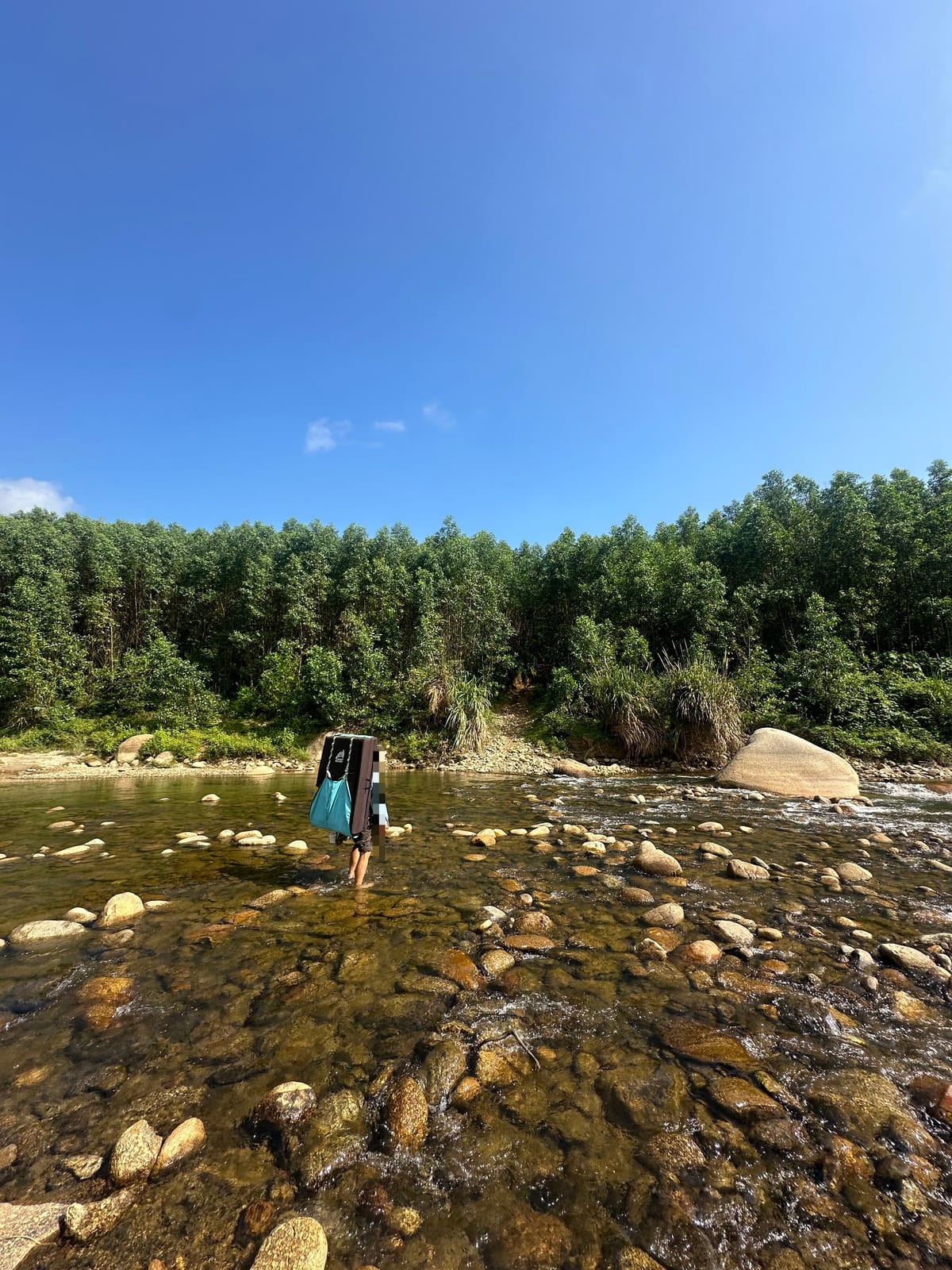
The approach to the Ba Na Hills areas crosses a river. Depending on water level the crossing can be tricky, so bring shoes you do not mind soaking.
II. No outdoor lead or top rope climbing in Da Nang
Can you sport climb or top rope outdoors in Da Nang?
No. Da Nang is an outdoor bouldering destination only. There is no established outdoor lead climbing and no outdoor top roping, and those areas may be closed. Bring pads, not a rope.
The community topo does document several walls with rope-climbing potential:
Son Tra Lake Potential Rope Wall 1 and 2. Close to the city, lots of space for parking and chilling, with boulder potential next to it.
Ghenh Bang Sports Wall. A big feature-rich wall on the coast, in the words of the developers "not ready for climbing yet".
Cu De River Tower. Looks excellent for rope climbing, only ever seen from the road, with no known access.
Bai Xep slabby cliff by the beach. Potential for technical slab rope climbing.
None of them are bolted or open. For roped climbing, the options are the Da Nang gyms or the limestone in northern Vietnam, where Cat Ba island and Huu Lung are the two established sport areas. See the Vietnam climbing seasons page for how those areas fit into the year.
III. Da Nang bouldering topo map
There is no printed guidebook for Da Nang, and theCrag and the topo apps are thin and outdated for the area. What exists instead is a crowdsourced Da Nang bouldering topo map, put together and kept up to date by the local climbers who found and cleaned these boulders. Versions of it circulate in the community and in the Facebook group rather than being published anywhere official.
Between them, those crowdsourced topos cover around 170 waypoints: individual boulders with photos and beta, parking spots, approach lines, area perimeters and a long list of unexplored zones. It is the real source of Da Nang bouldering beta, and it is worth asking for the current version in the Outdoor Bouldering Da Nang Facebook group before a trip, since new problems and new areas get posted there as they are found.
Every area below lists its coordinates and a Google Maps link, so this guide works as a standalone topo for the developed areas. Approaches are short but not always obvious, and going the first time with someone who knows the area saves a lot of wandering.
IV. Outdoor bouldering areas in Da Nang
A few short clips from these boulders before the area-by-area breakdown. More on TikTok at @regardedclimbs.
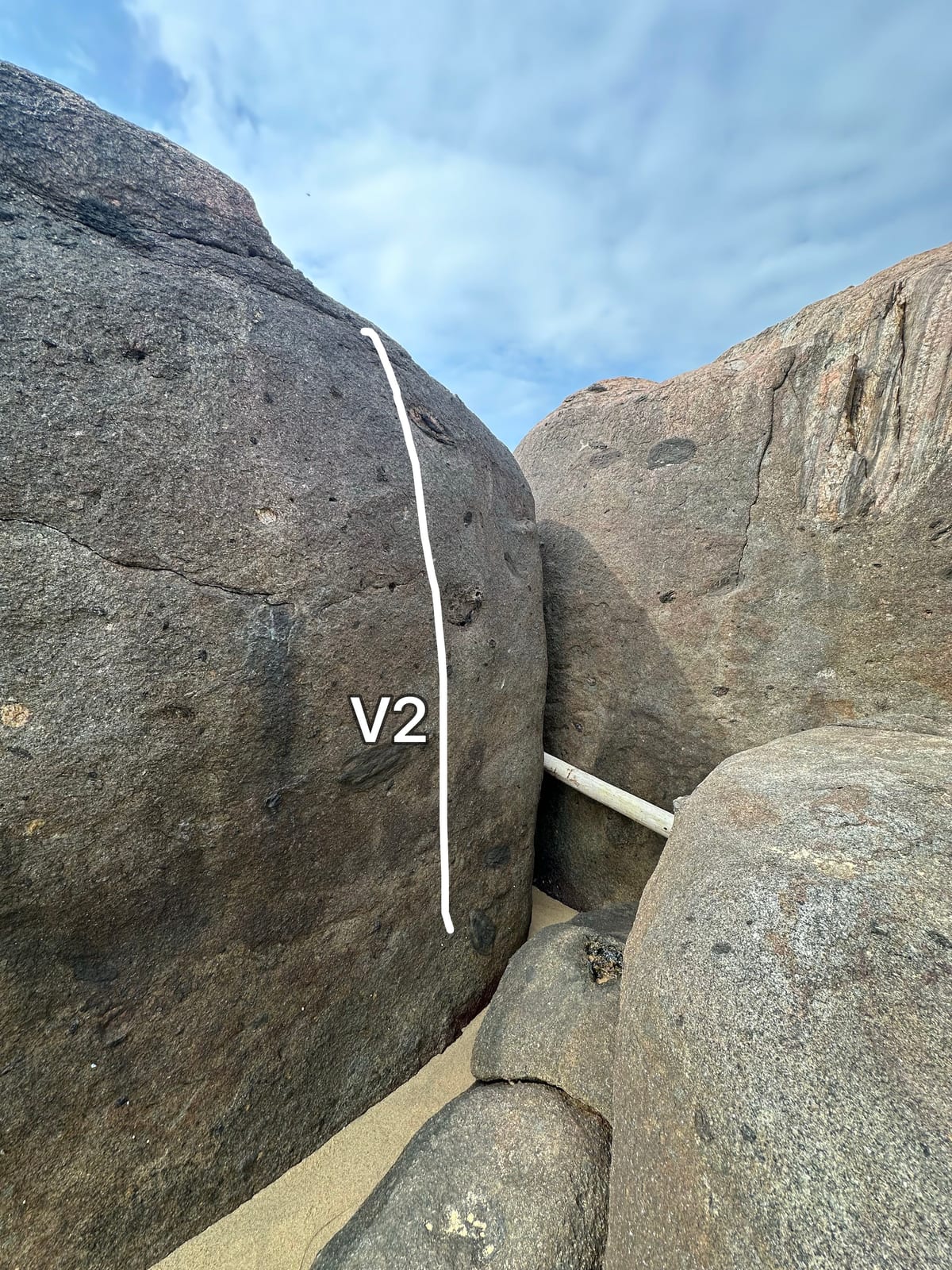
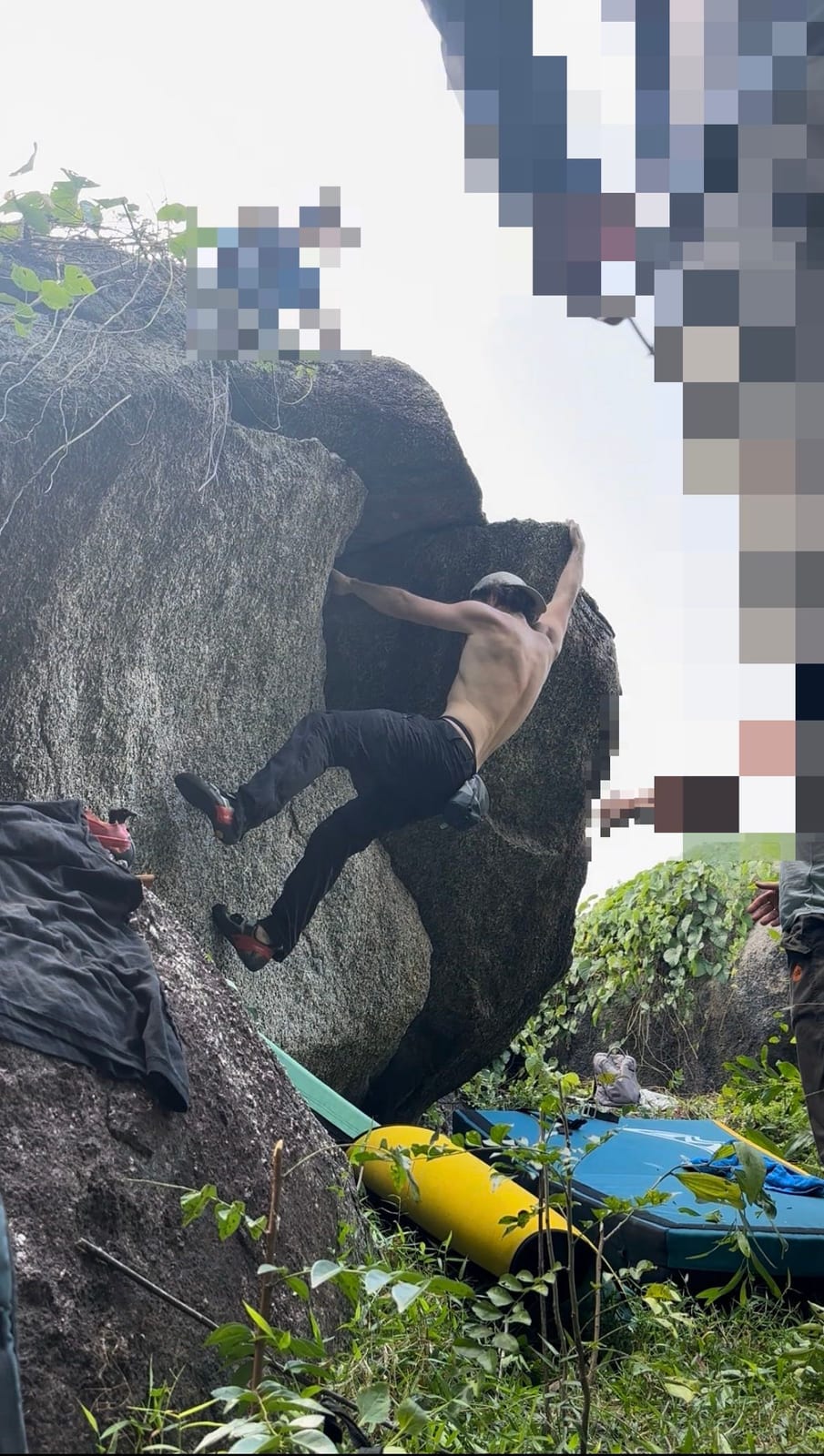
Bai Xep: a slip off a V2 (6a) above the water on one of the low tide boulders.Ba Na Hills: a V2 in the newer area in the trees, filmed in April.A mini sit start with a dab on the way up — typical of the low granite blocks around Da Nang.
A. Son Tra: Bai Xep (around 25 problems)
Description
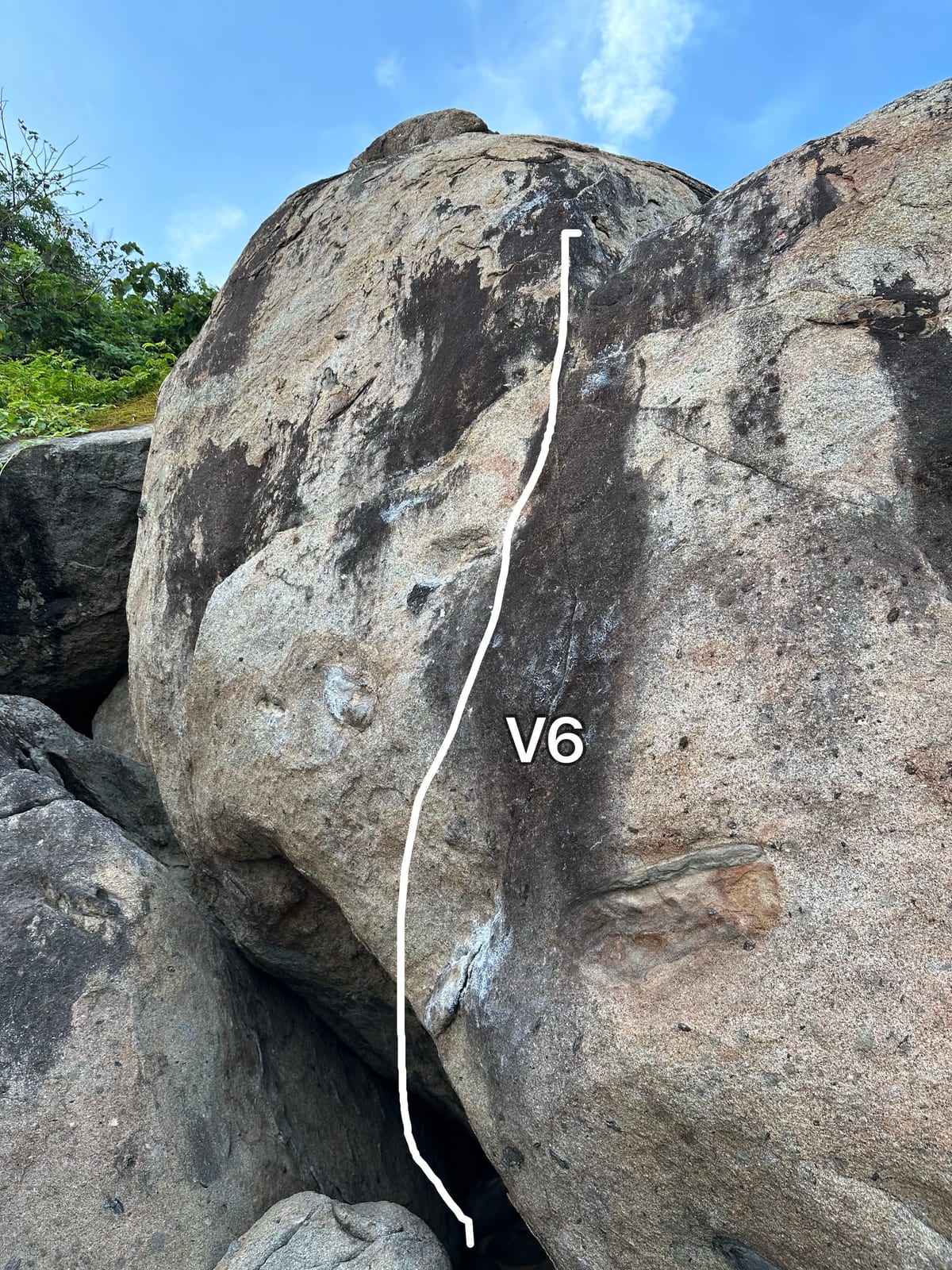
Boulder 10: a V6 sit start deep in the boulder off the sand. The same block gives traverses from both the right and the left.
Description
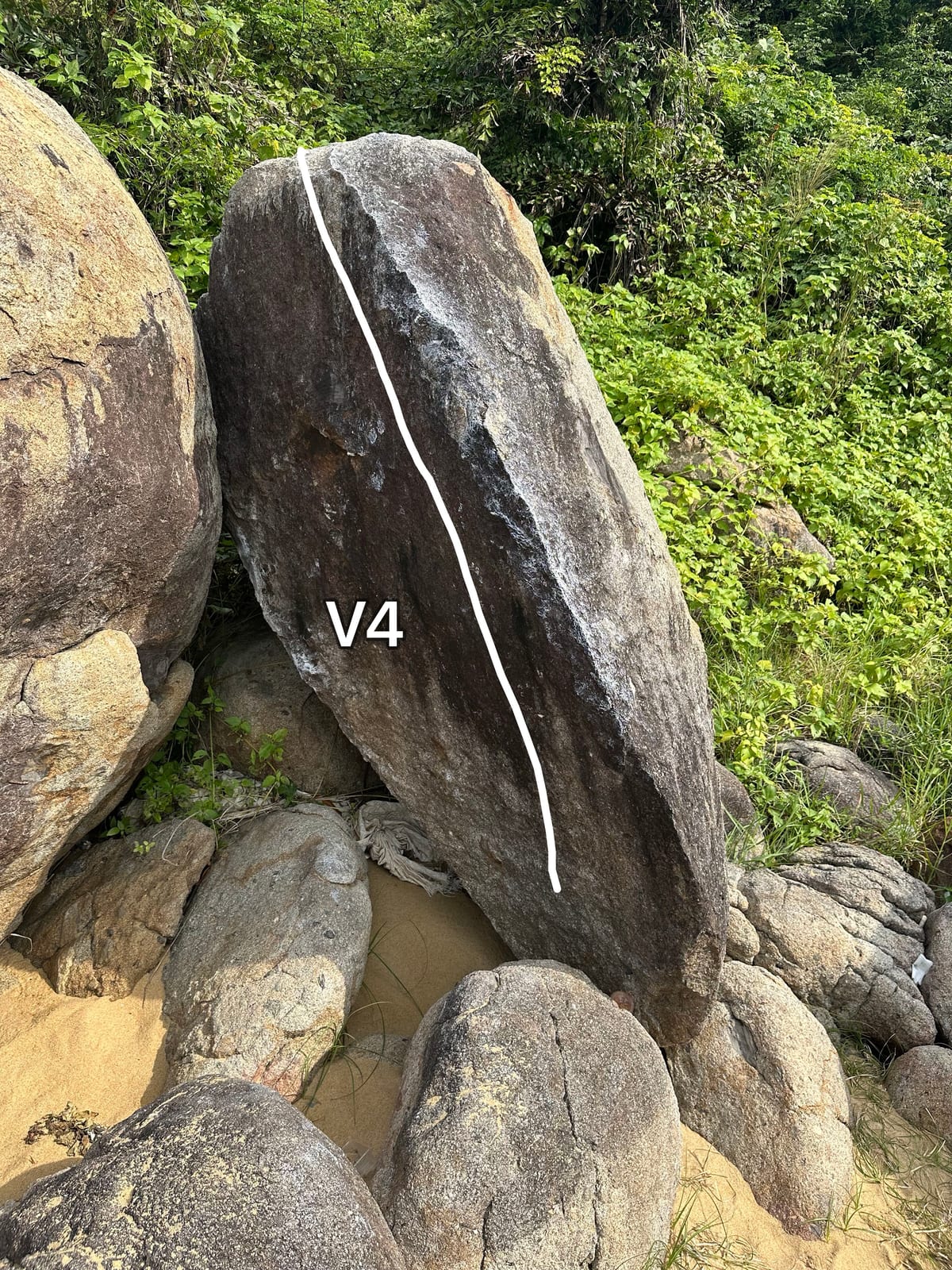
Boulder 11: a V4 arete on toe hooks and heel hooks, on the small flake boulder next to the big one.
Description
A stand start off a mono pocket on one of the low tide boulders. Check the tide before walking in, because the sand here goes underwater.
Description
Typical Bai Xep session: soft sandy landings, short walk-ins and boulders sitting straight on the beach.
Description
Topping out at Bai Xep. Descents on the bigger blocks are not always obvious, so it is worth finding the way down first.
Description
The hidden boulder, accessed from the top to the left of the concrete poles. Technical climbing on the right, a tricky project on the left. Beware of ants.
Description
The slabby face of the hidden boulder, on subtle feet and small crystals.
Description
Landings vary from perfect sand to blocky rock. Two pads and a spotter cover most of what is here.
Bai Xep is the most developed area in Da Nang and the best place to start: around 25 problems and counting, spread along the beach and the slope above it. Boulders sit on sand, walk-ins are short, and the grade spread is friendly, with plenty of easy warmups plus harder sit starts like the V6 on boulder 10.
Highlights include the beach twin boulders (5 problems), the hidden boulder up to the left of the concrete poles, boulder 10 with its traverses and hard low start, the small flake boulder 11 arete, boulder 13 with both hands in the crack, and boulder 15's slab leading to a high finish. Some of the low boulders are tide dependent and the sand gets wet at high water.
A coastal spread of boulders with a few taller blocks plus a stack of low sit starts and mantels waiting to be developed. Seven problems have been established so far. The area around boulders 5 to 7 is nice and flat. Boulder 1 has a very good landing with an easy warmup and a slightly sharp crack (around 5b, 5c from the sit start), boulder 7 is a big bulb around 6a+ that is harder for shorter climbers and not easy to descend. Boulder 5 may require wet feet or a wet pad, and boulder 8 starts off rock where you cannot place a pad at all.
There is no shade at Bai Da, so go early or late. There are two approaches, and the second one has fewer mosquitoes and may be quicker than going through the forest.
A small roadside cluster on Son Tra with four problems on the two largest blocks. Monkey Boulder 1 is the tallest; only the west facing side may be climbed, because the plants around the boulders were planted deliberately and the gardener has asked that they are not removed. Monkey Boulder 2 has a good traverse on the steep side if you avoid the top holds until you top out to the right. Do not climb the other side, it is slabby and drops down a cliff.
The area gets busy in the evenings and at weekends, and the monkeys will take food and drinks out of an open bag.
The closest area to the city, with lots of parking and space to hang out. It holds a roof boulder, a lizard boulder, a slab boulder and two potential rope walls, most needing cleaning. The roof boulder became a small praying spot in 2024, so it may be off limits now, and there is broken glass on the ground in places. Shade areas are marked on the map, and in the afternoons drinks are sold at one of them.
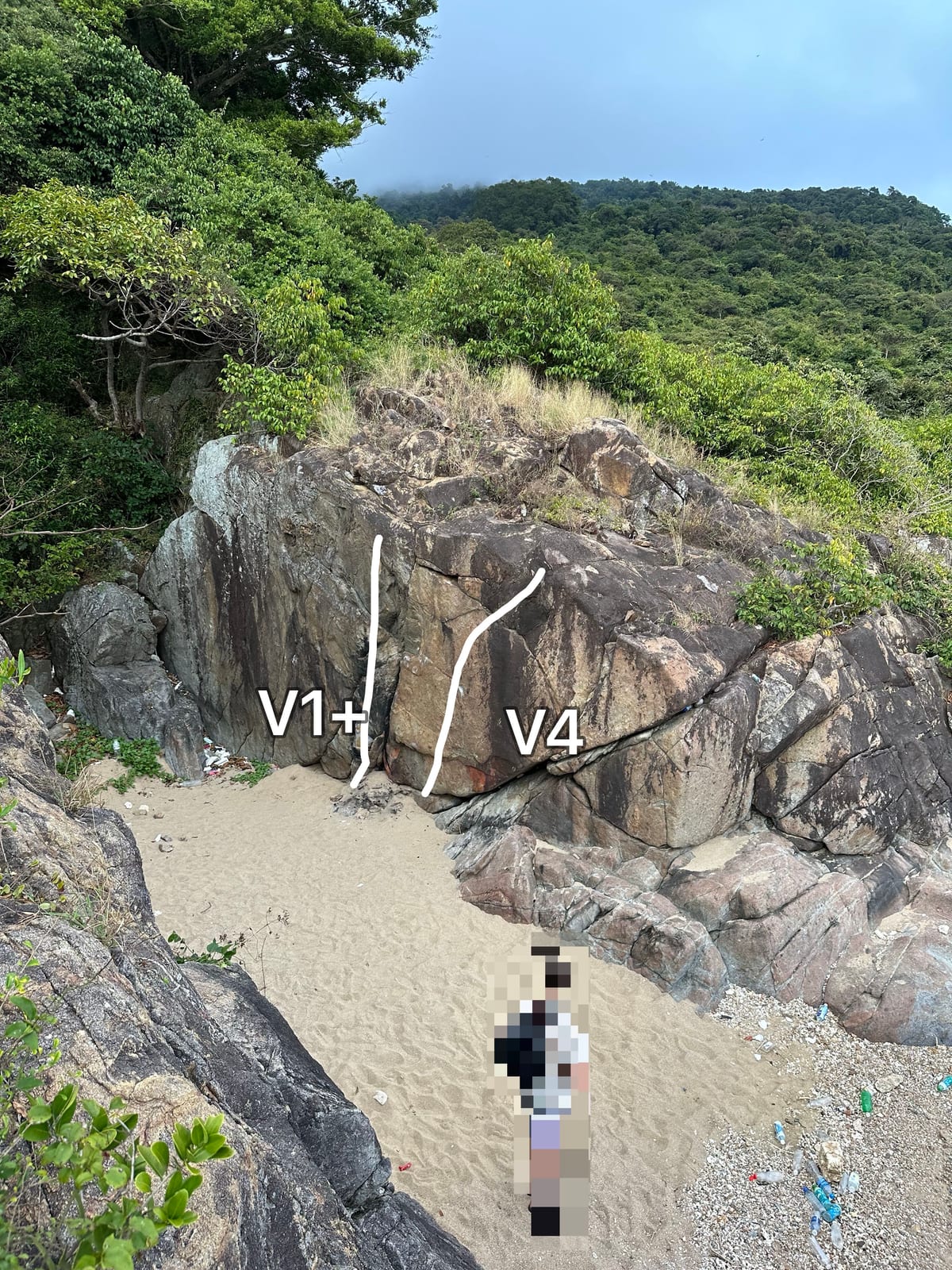
The right side of Ghenh Bang boulder 1: a V1+ sit start and a V4 stand start on crimps. Shade here lasts until about 1pm in April.
Description
A slightly overhanging wall of around 5 metres with small cracks and features, marked as an open highball project. It needs a lot of pads.
Description
Ghenh Bang sits on the north coast of Son Tra. Park at the local cafe (around 10,000 VND) and follow the path down. It is slippery, so wear proper shoes.
Ghenh Bang is the most scenic Son Tra area: boulders and walls on a rocky coastline with a soft sandy landing zone. Boulder 1 has three problems done and a project on the left; at least two pads and two spotters are recommended, because the traverse from the right can drop you backwards. The corner in the middle has a comp-style technical start. Boulder 2, on the other side, has easier problems that suit shorter climbers and beginners.
Boulder Wall 1 is tall with a slightly scary topout but a very soft sand landing. The obvious line is easy; the crack and the crimpy face to its right are harder, and there are still projects to the left. It has shade in the morning and again in the afternoon, but almost none in the middle of the day, so start early and move on. The cave has interesting problems on big holds and is low tide only.
Practicalities: park at the local cafe for around 10,000 VND (they sell soft drinks and fresh coconuts for about 40,000 VND), follow the path down from the cafe in proper shoes because it is slippery, and expect crowds on weekends and holidays. The monkeys here are bold, so food and gear stay closed and close by.
Granite in the Ba Na Hills. Most of the area is in the trees, so there is far more shade here than on the coast.
Description
Park by the road, walk down and follow the river to the crossing. Depending on the water level this can be tricky.
Description
Area 2.2 was recently cut down, which makes access easy but leaves it fully exposed to the sun. Flat, mostly good landings that still need cleaning.
Description
One of the boulder fields below Ba Na Hills. Plenty of blocks here have never been touched.
Description
Blocks hidden in the trees. Shade all day, but expect vegetation and cleaning.
Description
Coarse, featured granite. Good landings in the open areas, and a river and swimming pool nearby for after the session.
The Ba Na Hills areas sit about an hour west of the city below the famous cable car and Golden Bridge, and they are the best option when the coast is too hot. Area 2.1 has around 20 problems on boulders 1 to 13, with more density further up the hill. Some are sunny, but a good number are shaded on the way up.
Sample of what is there: boulder 4 has three problems including a left line that avoids the edge until the top and a middle line with two variations, boulder 8 gives a good warmup on unusual holds, boulder 9 is a fine line that gets easier as it gets scarier, and boulder 13 is very high with potential for bold, hard problems and no obvious descent yet. Area 2.2 was recently cleared, so access is easy but there is no shade, and Area 4 has big blocks with real potential, although establishing good lines on the smooth granite there is hard work.
Park by the road, walk down and follow the river to the crossing. There is a beautiful swimming pool area among boulders with a small waterfall, plus a beach spot on the river, which makes this a great full-day trip with non-climbing friends.
North of the city, below the Hai Van Pass, two beach areas hold a scattering of established problems and a lot of untouched rock. The main zone has the Big Tower, an intimidating highball with good options, plus several rock formations catalogued as Potential Boulder Problems 1 to 6, with two sit starts on the right side of formation 2, a line out of the crack, and a beach boulder (formation 3) with a few problems climbable in several variations and a little morning shade. Further south, Bai Ham holds rounder rock with less features but real potential, and the Boulder Vang blocks give a good warmup plus three problems on Vang 3.
Access: park at the cafe above the area for the day, or a few metres down the road for around 40,000 VND overnight. A small trail leads from the cafe down the mountain, about 15 minutes, and it is manageable with a crash pad. The way down crosses a live railway line, so watch for trains. At the other access point, the bar charges around 40,000 VND for parking and access per person, which is a lot; the path from the parking is more relaxed anyway.
Almost nothing here provides shade at midday. The best plan is sunrise or late afternoon, with a pine forest between the two areas that is good for hammocks and tents if you want to camp and climb both ends of the day.
River boulders northwest of the city with two named problems worth the trip. Vietnam Heat Easy is around 5 / V1: four tick marks show the starting holds, then straight up, quick and satisfying. Vietnam Heat is around 6A / V3 from the same start, moving left to the seat then up, on jugs, crimps, slopers, a knee bar and a high foot. Nearby there is a juggy easy highball that was partially cleaned in late 2023 and still needs a few branches cut, with an easy descent round the back, plus a good-looking vertical boulder whose landing is often wet from the neighbouring rice fields.
The area is on private land with a friendly owner, and the developers ask visitors to make contact rather than just turn up. Further up, Suoi Mo Khe Ram is a small stream with a waterfall and a swimming spot, with bouldering potential but awkward landings.
I. Ngu Hanh Son, the Marble Mountains (around 6 problems)
Hoa Son, one of the Marble Mountains just south of the city, has around six problems on boulders sitting between the altars, some slabs and some genuinely hard rock. It is an active religious site and a busy tourist attraction, so it works as a short session on a sightseeing trip rather than a destination day.
Out at Bai Xep on Cu Lao Cham, the island off Hoi An, there are around 11 boulders with about 8 problems climbed so far. Boulder 2 is the best on the island, with a 5a and a 5c on sit starts to the left and a 5c on the right that avoids the good holds; boulder 3 has a tricky traverse plus an easy slab; boulder 4 is a nice sit start that also goes without (around 5a) and has a slab on the reverse. Two boulders sit here and two more a bit further south. Getting there means a boat from Hoi An, so combine it with a beach day.
The crowdsourced topo carries a long list of zones that have been spotted from the road, from satellite images or from tips, and never properly visited:
South Lake areas 1 to 3. An overhang that reportedly looks superb, but the whole dam area may be closed to entry.
Ba Na Hills Areas 1 and 3. Promising perimeters mapped from satellite images, entry only on foot through forest.
Ban Co Peak. A few interesting boulders on Son Tra, untested, and the road to the top may still be closed (it was in late 2023).
Ba Na roadside 1 and 2. One minute from the road, with perhaps 15 to 20 problems on a handful of blocks.
Boulder fields and dark rock formations found by Vietclimb, never visited.
Current access status for these zones is worth checking in the Facebook group before riding out to them.
V. Grades and rock type
Everything documented in Da Nang so far is granite. The established problems mostly sit between about V0 and V6 (roughly Font 3 to 6C), with the hardest documented lines being the V6 sit start at Bai Xep and a handful of open projects that will go harder. Expect sit starts, mantels, slopers, crimpy faces, cracks that are sometimes sharp, technical slabs and a few serious highballs.
Rock quality varies. Plenty of these boulders see very little traffic, and heavy rain leaves some of them chossy, with loose flakes, gritty holds and dirt in the cracks. Holds break. Test anything that sounds hollow, and be particularly careful on the highballs: The Big Tower, the Ghenh Bang highball wall, Ba Na 2.1 boulder 13 and the taller Bai Xep blocks are high enough that a snapped hold matters, several have awkward or unknown descents, and pads and spotters do not cover a topout fall.
One quirk to be ready for: the community topo mixes grading systems. Older entries use French/Font grades (3, 4+, 5b, 5c, 6a+) while newer photo topos use the V scale (V1+, V2, V4, V6). If you need to move between them, use the bouldering grades comparison table or the bouldering grade converter. Grades here are also soft consensus at best, since most problems have only a handful of ascents.
VI. Crash pad rental in Da Nang
There is no crash pad rental in Da Nang yet. No shop, no gym and no guiding company rents bouldering pads at the time of writing. The alternatives:
Bring your own pad. Most airlines take a folded pad as checked luggage, and it doubles as a bag for the rest of your kit.
Ask in the Facebook group. Post in Outdoor Bouldering Da Nang before you arrive. Locals own pads and most sessions are organised there.
Ask at the climbing gyms. Danang Climbing and SCLIMB are the hubs of the local scene, so they hear first if rental appears.
Buy in Vietnam. Pads are easier to source in Hanoi or Ho Chi Minh City; Vietclimb in Hanoi is the established reference point for the outdoor scene.
Plan for two pads. Ghenh Bang boulder 1, the cave and the highball walls all call for two or more pads and spotters.
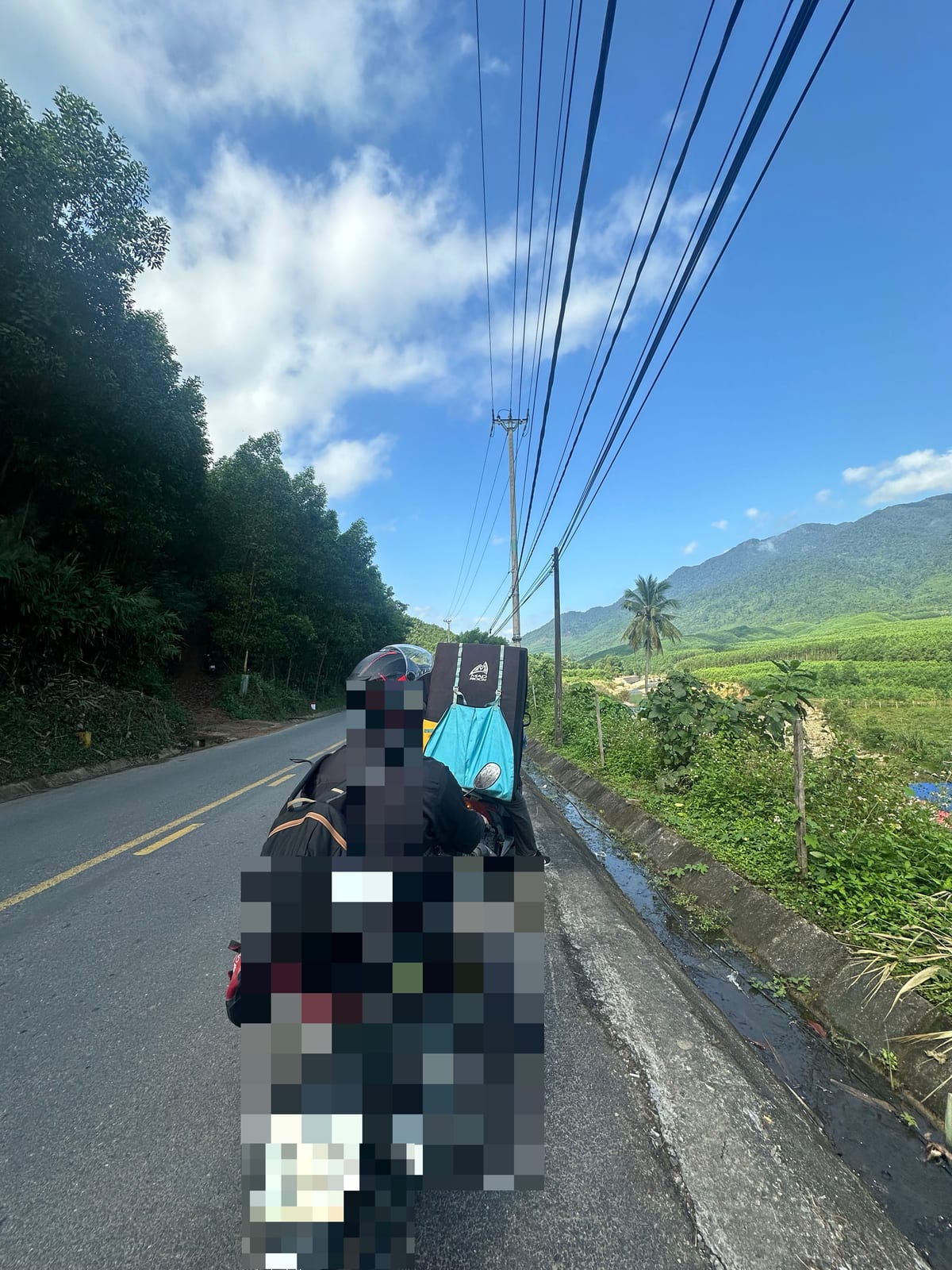
Pads travel to the rock strapped to the back of a scooter, as in the photo above.
VII. Climbing seasons and weather in Da Nang
Da Nang is tropical and humid, and the season shapes what is climbable more than the temperature does. Conditions get posted in the Facebook group through the year.
February to May, the best window. Cooler and drier, the forest areas have dried out, and shade at Ghenh Bang lasts until about 1pm in April. Most of the development work has happened in these months.
June to August, hot and dry. Climbable but draining. Sunrise sessions, the shaded Ba Na Hills boulders, a swim in the river or the sea in the middle of the day, then out again late afternoon.
September to December, rain and typhoon season. The hardest time to boulder here. Rock stays wet, approaches get muddy, rivers rise and the vegetation takes areas back. Expect to lose days to weather, with the gyms as the fallback.
Tides. The Ghenh Bang cave, some Bai Xep beach boulders and parts of Bai Da only work at low tide, so a tide chart is worth checking before riding out.
VIII. Indoor climbing gyms in Da Nang
The indoor scene is small, and it is where the outdoor scene organises itself. It is also the wet weather option.
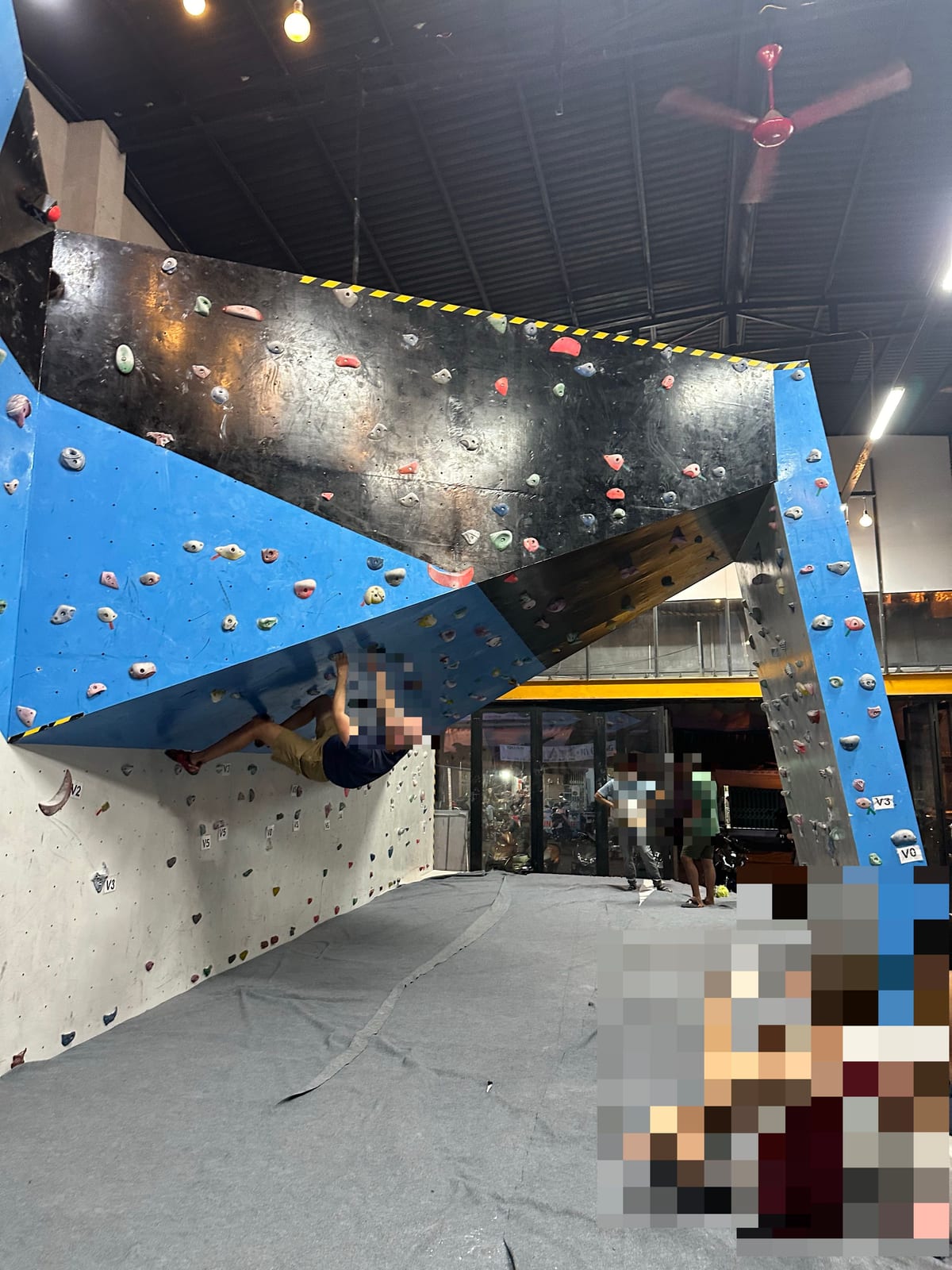
Between them Da Nang currently has one small local bouldering gym plus Danang Climbing, and a larger gym with both bouldering and roped walls is being built. That will be the first place in the city with indoor lead and top rope climbing at scale. Its status is worth checking ahead of a trip in the rainy months.
The gyms in the evening. Danang Climbing and SCLIMB are small enough that you end up talking to everyone, and most outdoor sessions start from a conversation there.
X. Transportation in Da Nang
A. Motorbike and scooter rental
The default way to get to the boulders. Rentals run from around 100,000 to 175,000 VND per day (roughly 5 to 7 USD) depending on the bike, with cheaper weekly and monthly rates. Everything in this guide except Cu Lao Cham is reachable by scooter: Son Tra 20 to 30 minutes, Ba Na Hills about an hour, the Hai Van Pass beaches around 45 minutes.
A helmet and the right licence matter here for insurance reasons: most policies will not pay out after an accident without them. Crash pads strap to the back rack easily.
B. Ride hailing and taxis
Grab, Be and Xanh SM (electric) all work well in the city and are cheap. They are fine for the gyms, the Marble Mountains and the beach, but for the crags they are impractical: you would need the driver to wait or arrange a pickup, and some approaches start where the road ends.
C. Car and boat
A car with a driver makes sense for a group heading to Ba Na Hills or the Hai Van Pass with several pads. For Cu Lao Cham you take a boat from Hoi An. Check the schedule and the weather, since services stop in rough conditions.
Crash pads (ideally two). There is no rental, and several problems need two pads plus spotters.
Brush and rag. Many boulders are freshly cleaned or half cleaned.
Tape and skin care. The granite is coarse and some cracks are sharp.
Mosquito repellent. For the forest and river approaches, particularly at Bai Da and Ba Na Hills.
Proper shoes for the approach. The path down to Ghenh Bang is slippery and the Ba Na approach crosses a river.
Plenty of water and sun protection. Several areas have no shade at all in the middle of the day.
Small first aid kit. Most areas are 30 to 60 minutes from a road, sometimes across a train line.
Rubbish bag. There is broken glass and litter at some areas.
Climbing gear for sale in Da Nang is limited, so shoes and chalk are best bought before arriving, or from whatever the gyms stock. For anything bigger, Hanoi and Ho Chi Minh City are the places to shop in Vietnam.
XII. Going beyond climbing and rest days in Da Nang
Description
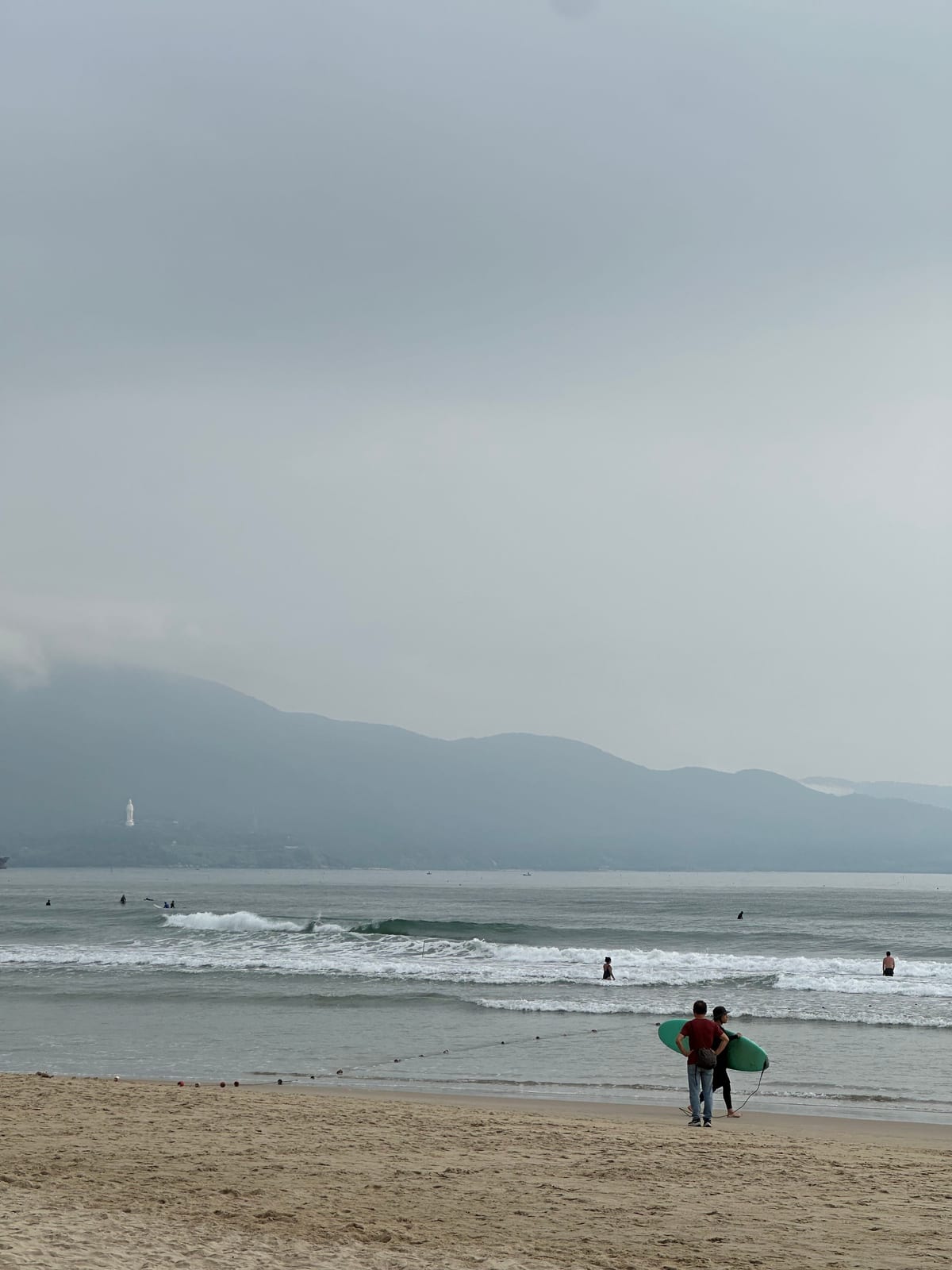
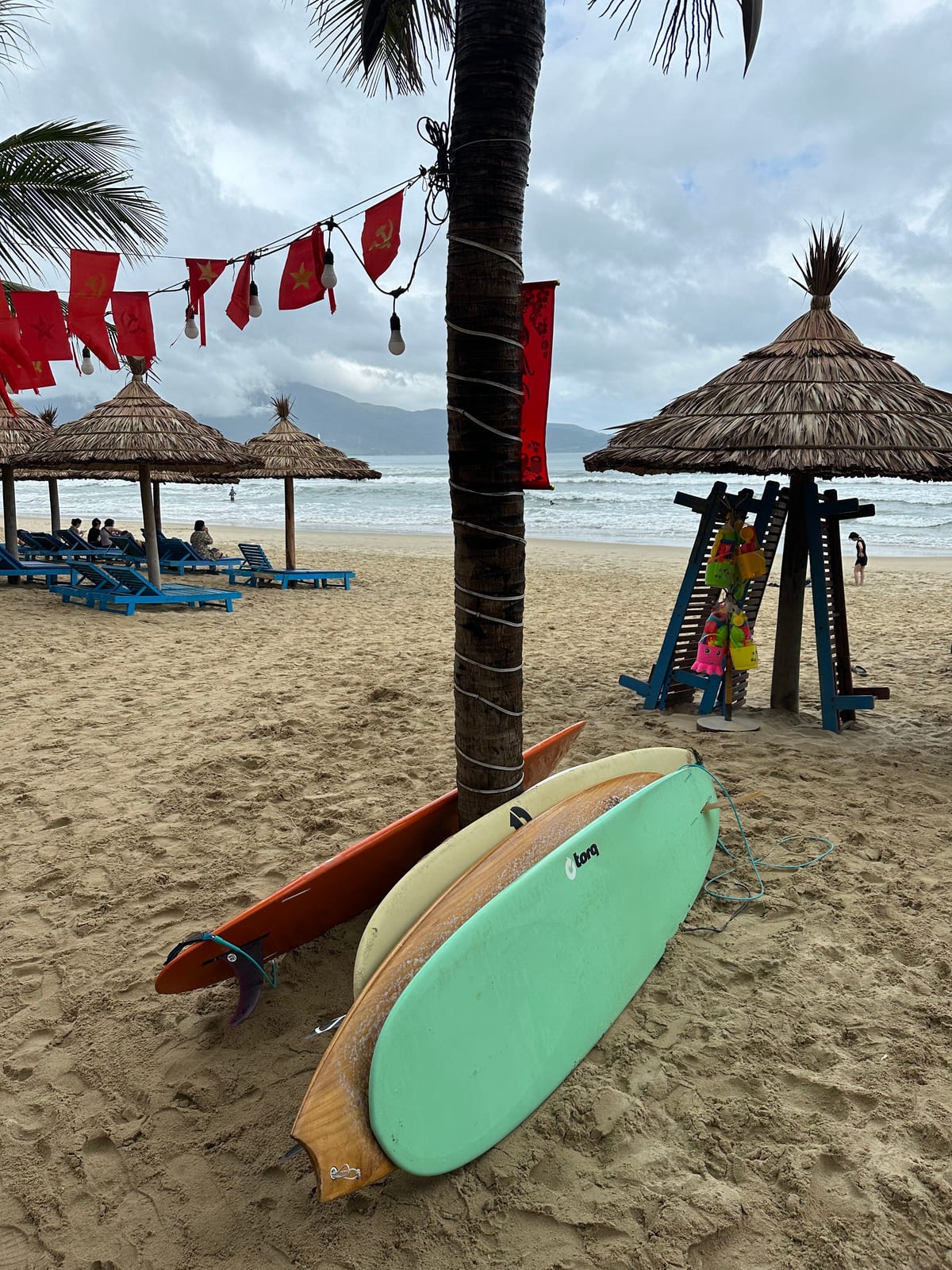
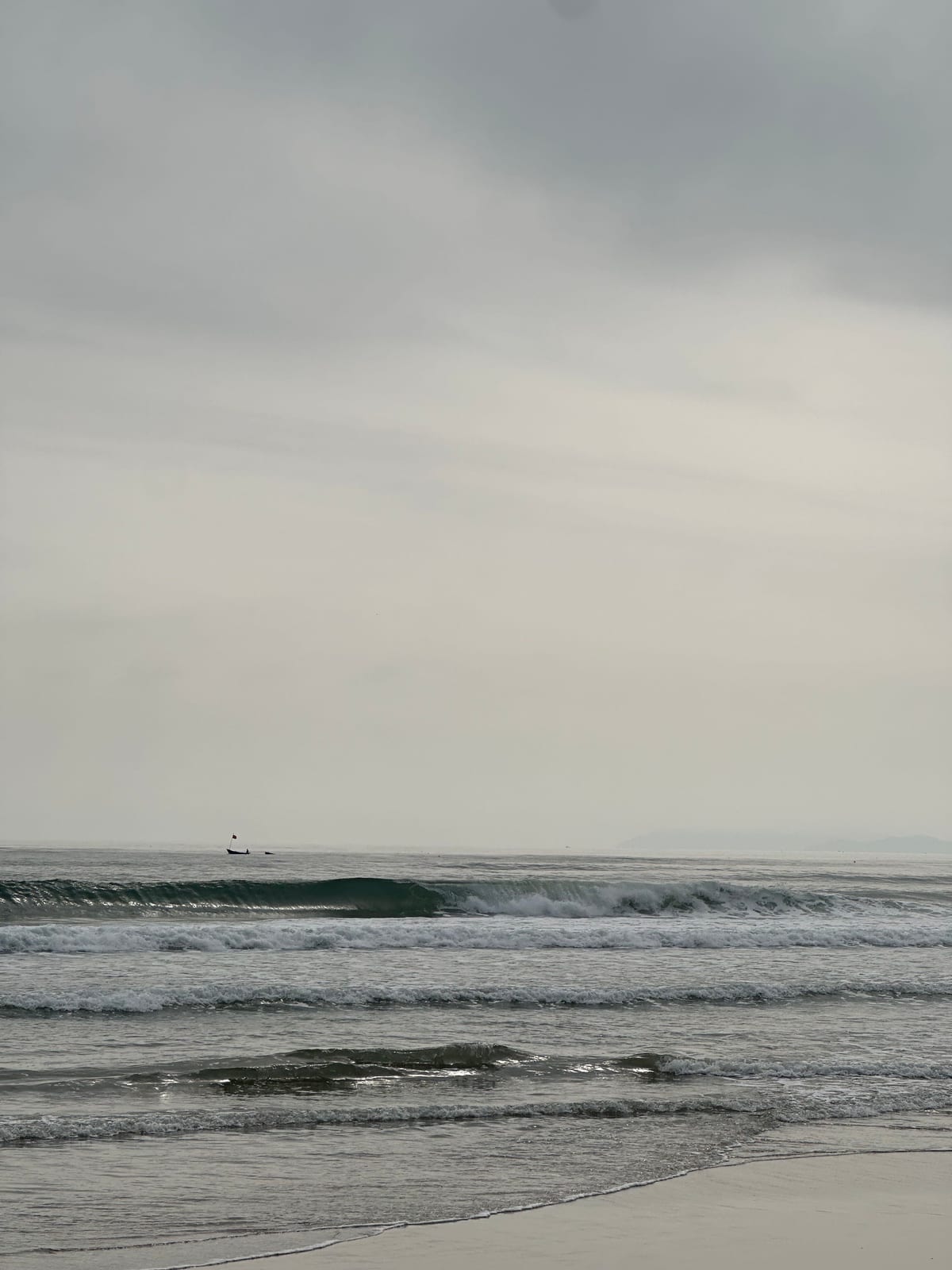
My Khe is one of the friendliest places in Vietnam to learn to surf, with soft beach break waves.
Description
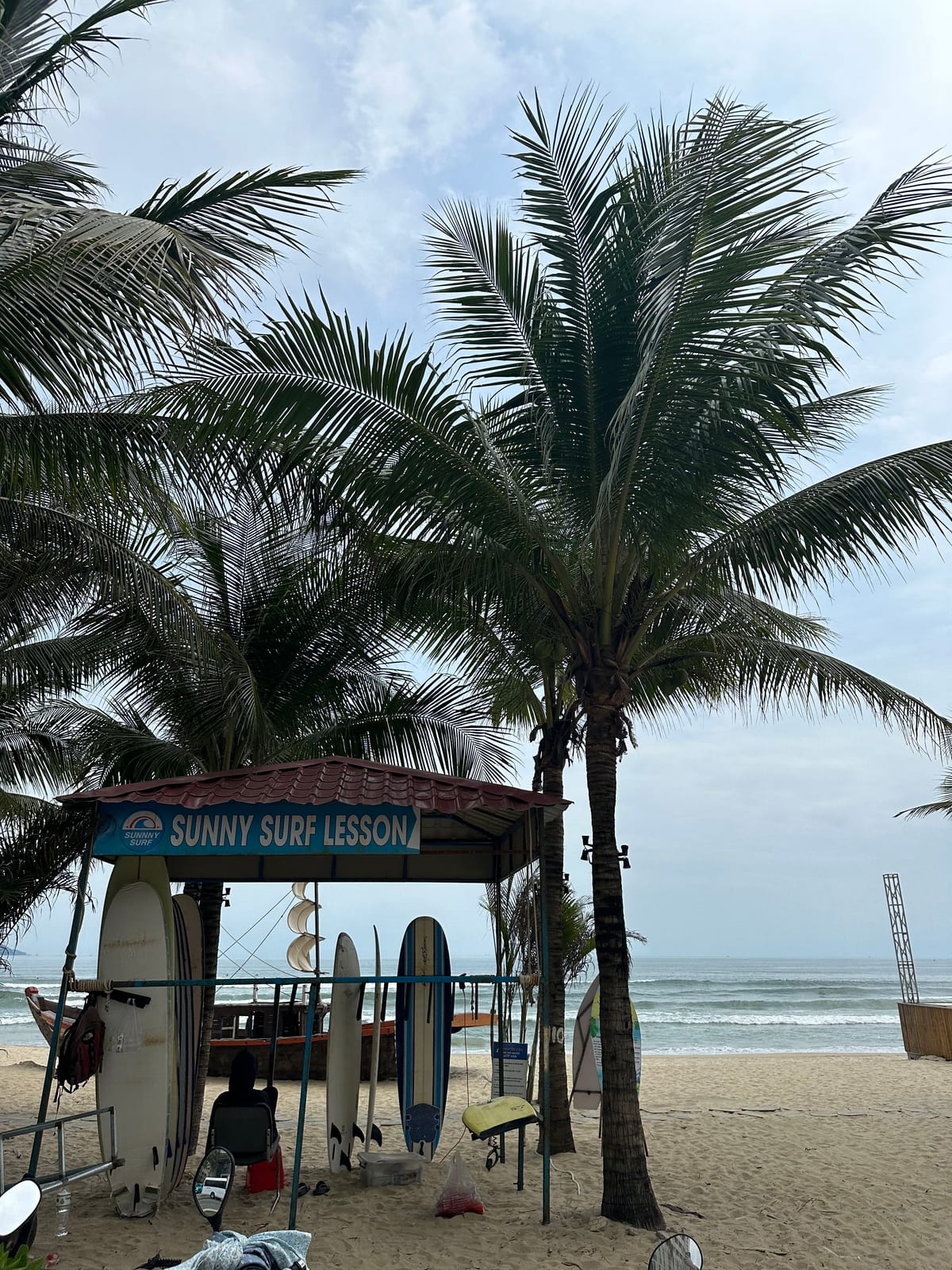
Surf schools and board rental line the beach. Boards and lessons are cheap and easy to arrange on the spot.
Description
Short boards and longboards for rent right on the sand.
Description
Surf is best in the cooler months, which overlaps neatly with the rainy season when bouldering is difficult.
Description
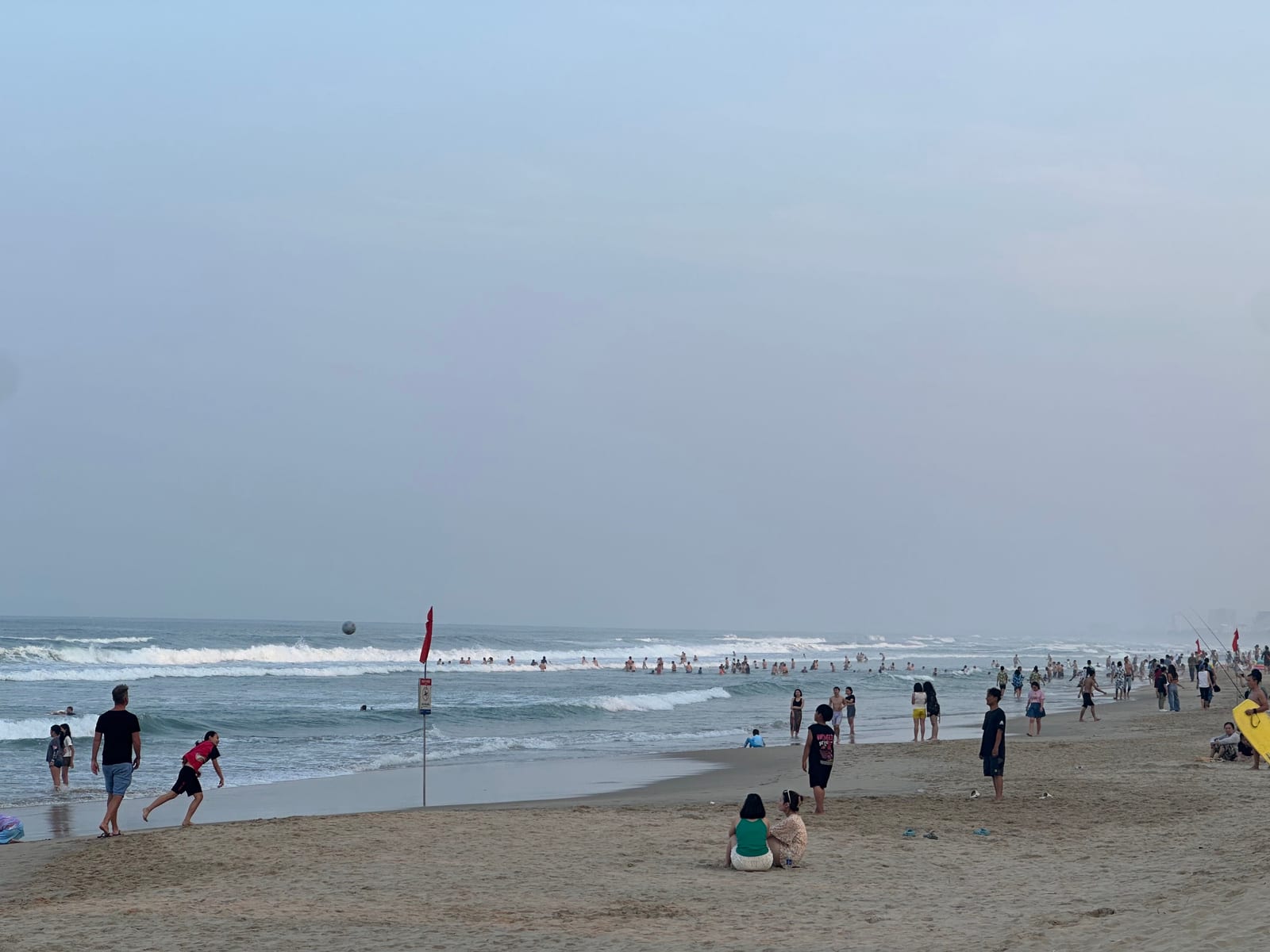
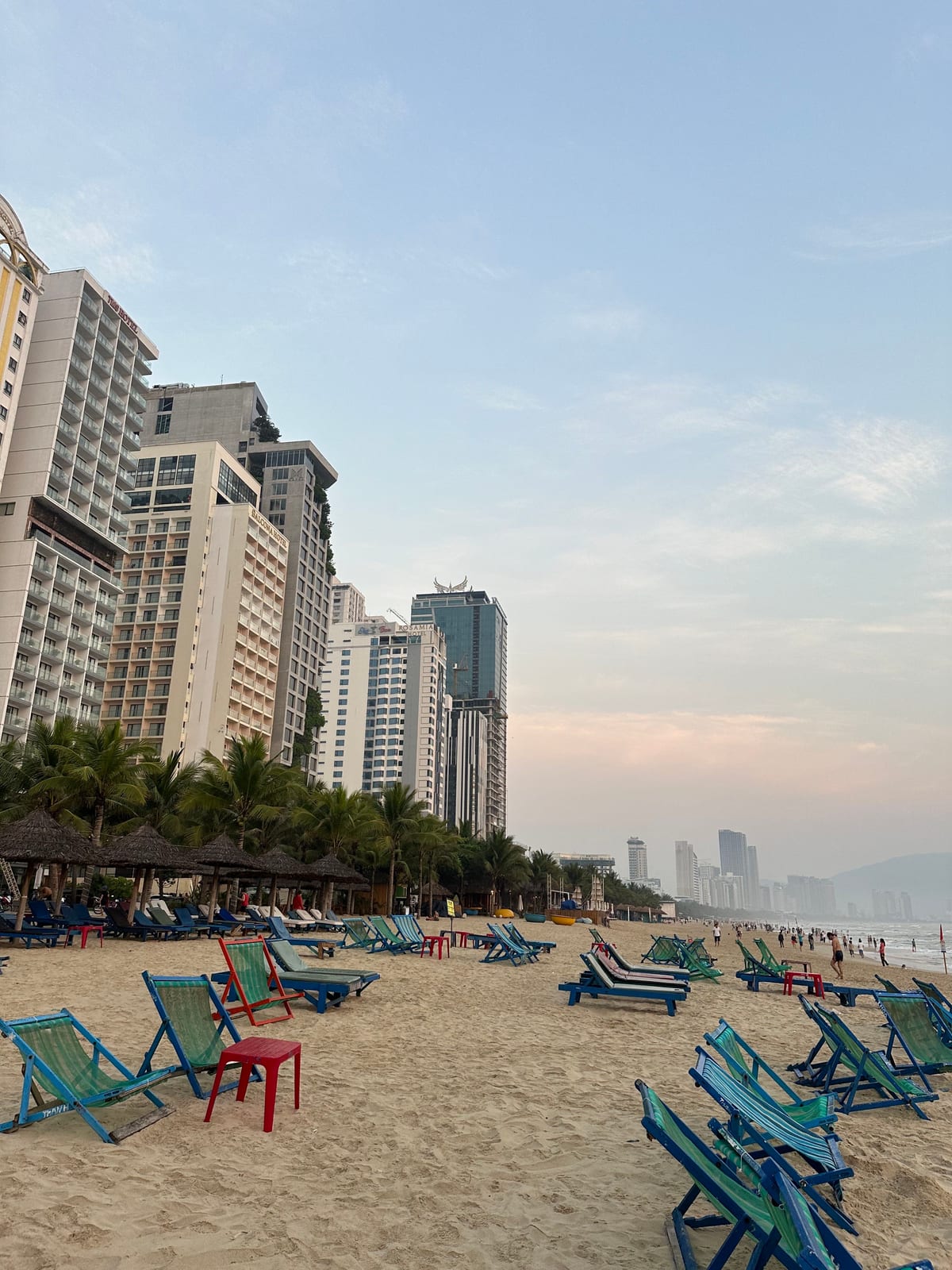
My Khe fills up in the late afternoon. The water is warm year round, which makes it a good end to a hot session on the coastal boulders.
Description
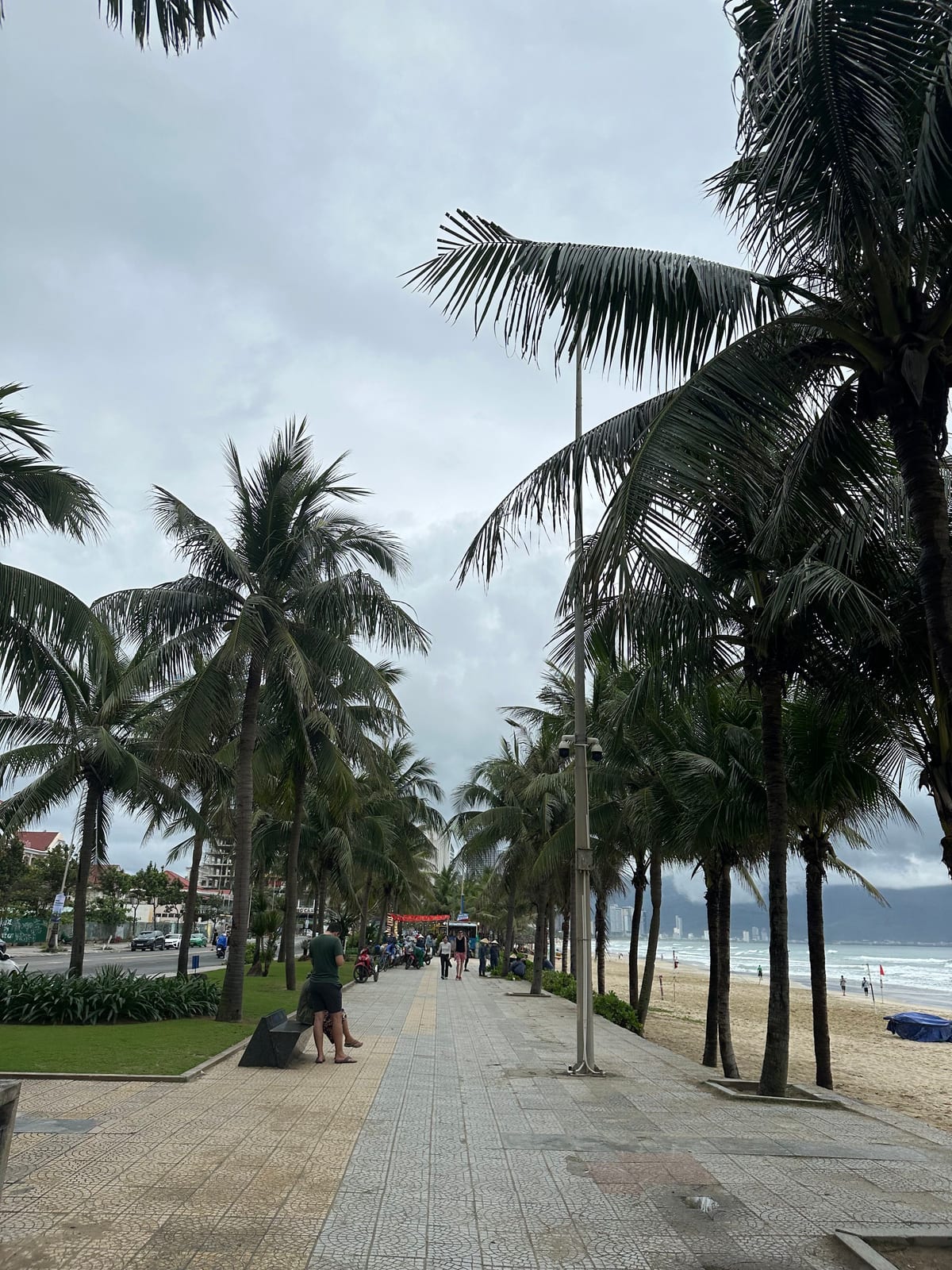
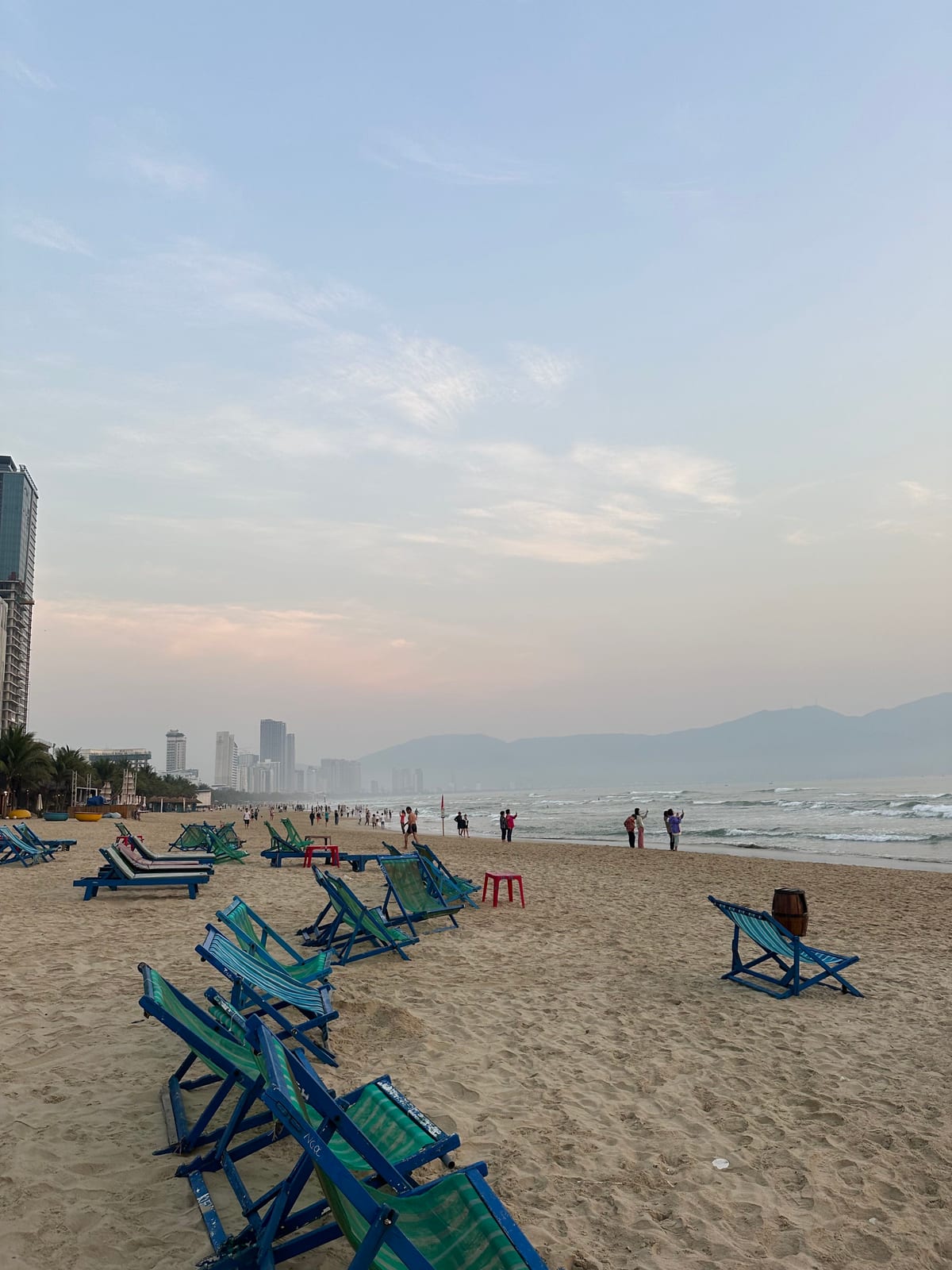
The beach boardwalk runs for kilometres along the city.
Description
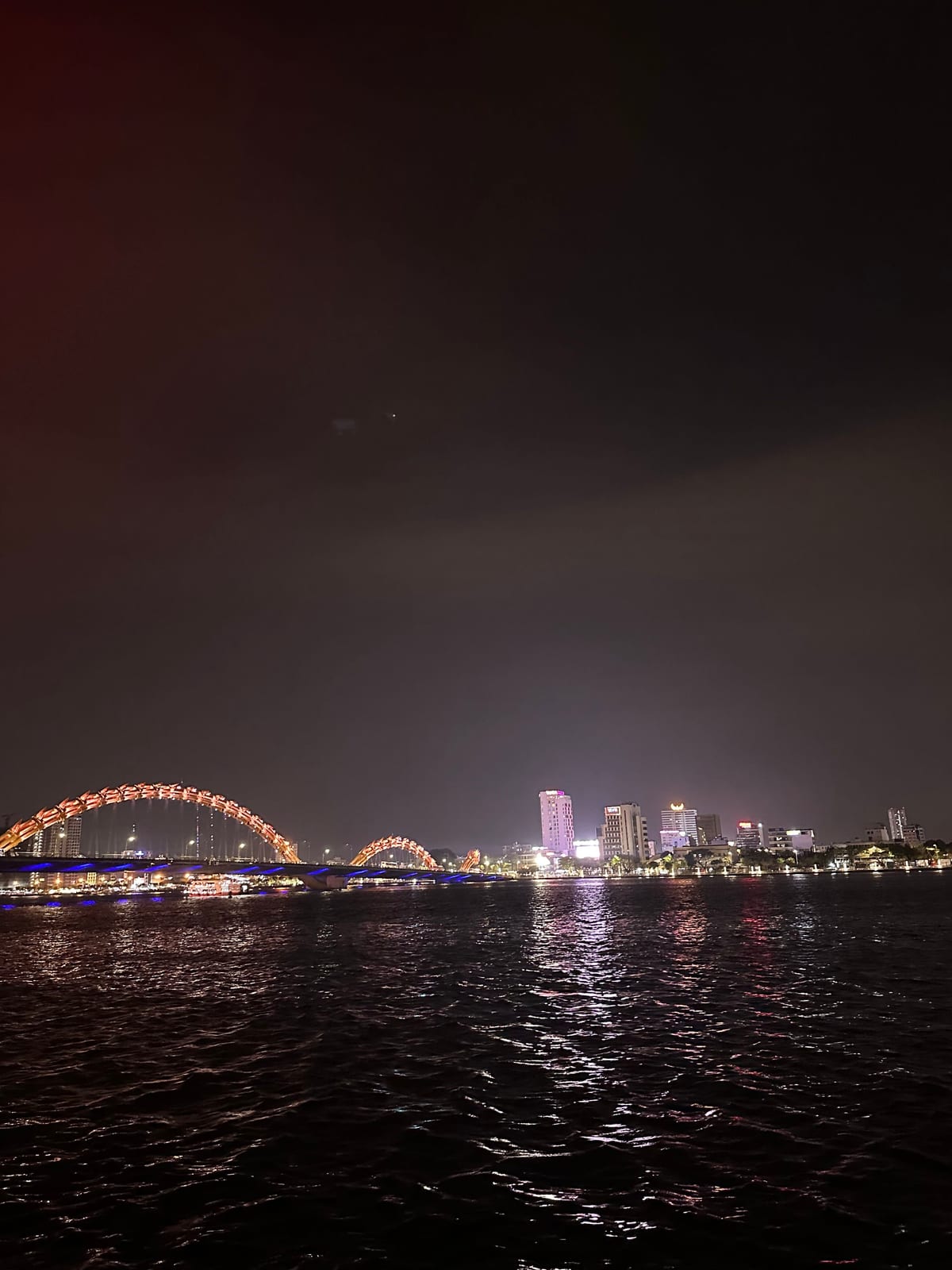
The Dragon Bridge over the Han River. At weekends it breathes fire and water in the evening.
Description
The fire and water show is free to watch from the riverside. It fills up early on the bridge side.
Description
River cruise boats on the Han river.
Description
Sun loungers on My Khe with Son Tra behind, the peninsula that holds most of the bouldering.
Description
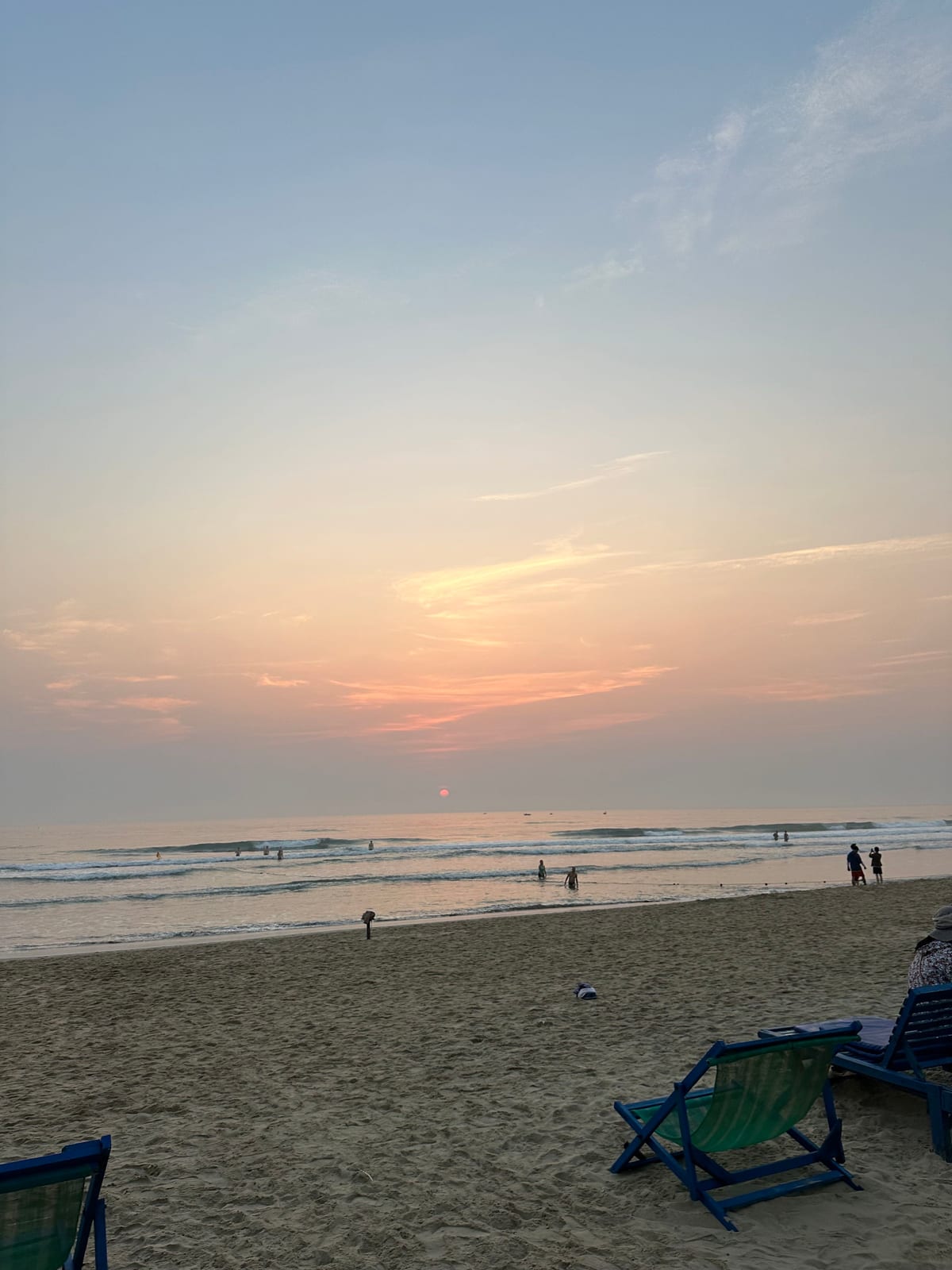
Locals swim at sunrise and sunset, which fits well around an early start at the beach boulders.
Surfing at My Khe. Beginner friendly beach break, cheap lessons and board rental right on the sand.
Hoi An. 45 minutes south, with the old town, the beaches and kitesurfing further down the coast.
Son Tra peninsula. The coastal loop, the Lady Buddha, viewpoints and monkeys, with the boulders on the way.
Ba Na Hills and the Golden Bridge. The cable car resort above the same valley as the Ba Na boulders.
The Marble Mountains. Caves, pagodas and viewpoints, plus the Hoa Son boulders.
Hai Van Pass. One of the best motorbike rides in Vietnam, with the beach boulder areas below it.
Rivers and waterfalls. The Ba Na river pools and Suoi Mo Khe Ram are proper swimming spots.
Cafes and coworking. Working mornings and climbing afternoons is a common pattern here.
An Thuong and My Khe (beach side): The default choice for climbers and nomads. Walking distance to the beach and surf, packed with cafes, coworking, western and Vietnamese food, and a 20 to 30 minute ride to the Son Tra boulders.
Son Tra and the north end of the beach: Quieter, closer to Bai Xep, Bai Da, the Monkey Boulders and Ghenh Bang. Best if you plan to climb on the peninsula most days and do not mind being further from the nightlife.
Hai Chau (city centre, west of the river): Cheapest for long stays, closest to the Han River, the Dragon Bridge and the markets, and the most convenient base for riding west to Ba Na Hills or north to the Hai Van Pass.
Hoi An: Worth a few nights at the end of the trip, and the jumping off point for the Cu Lao Cham boulders.
Rough price guide:
Hostels: from around 150,000 to 350,000 VND per night (about 6 to 14 USD)
Hotels and apartments: from around 400,000 to 1,500,000 VND per night (about 15 to 60 USD)
Monthly rentals: studios and apartments in An Thuong commonly run 6,000,000 to 15,000,000 VND per month (about 240 to 600 USD)
Trip.com links are affiliate links. They cost you nothing extra and help keep these guides free.
XIV. Getting to Da Nang
Flying
Da Nang International Airport (DAD) sits inside the city, about 10 to 15 minutes from the beach side by taxi or Grab. It has direct flights from all over Vietnam and much of East and Southeast Asia, which makes Da Nang one of the easiest climbing stops in the region to reach.
Da Nang is on the north-south reunification line. The Hue to Da Nang leg over the Hai Van Pass is one of the most scenic train rides in Asia, and it runs right past the beach boulder areas. Hanoi and Ho Chi Minh City are both overnight sleeper journeys.
Sleeper buses connect Da Nang with Hue, Hoi An, Nha Trang, Hanoi and Ho Chi Minh City. If you are riding the country on a motorbike, the Hai Van Pass into Da Nang is the classic approach, with the beach boulders on the way in.
Bouldering injuries happen, approaches are remote, and scooters are the main risk in Vietnam. Check that your policy actually covers bouldering and riding a motorbike with the appropriate licence. At the time of writing I use SafetyWing Nomad Insurance for climbing trips.
An eSIM gives you mobile data as soon as you land, with no SIM shop and no roaming bill. You install it on your phone before you fly and keep your own SIM for calls and texts. Saily covers Vietnam, and the small plans cost a few dollars. Check that your phone supports eSIM first.
Most standard travel policies exclude rock climbing, and a lot of them exclude riding a scooter too. Check your own policy first — and if it does not cover you, this is the one I use.
Covers climbing and a long list of other adventure activities
Buy it after you have already left home, and extend it monthly
Emergency medical cover and evacuation, which is the part that actually matters
Affiliate link. It costs you nothing extra, and I only recommend cover I have bought myself. Always read the policy wording for your own activities.
Da Nang climbing FAQ
Is there crash pad rental in Da Nang?
There is no commercial crash pad rental in Da Nang yet. Climbers bring their own pads, borrow them through the Outdoor Bouldering Da Nang Facebook group, or ask at the local climbing gyms. Pads travel fine strapped to the back of a scooter.
Is there outdoor lead climbing or top roping in Da Nang?
No. Da Nang is an outdoor bouldering destination only, because the outdoor roped areas may be closed. Several walls around Son Tra, Ghenh Bang and the Cu De river have obvious rope-climbing potential, but nothing is bolted or open. For roped climbing, use the indoor gyms in the city or travel to Cat Ba or Huu Lung in northern Vietnam.
How many boulder problems are there in Da Nang?
The crowdsourced Da Nang bouldering topo lists around 70 to 80 documented problems across Son Tra (Bai Xep, Bai Da, Monkey Boulders, Ghenh Bang), Ba Na Hills, the Hai Van Pass beach areas, the Cu De river, the Marble Mountains and Cu Lao Cham island, plus a long list of cleaned and uncleaned projects. The scene is young and new lines are added regularly.
When is the best time to boulder in Da Nang?
The cooler, drier months from roughly February to May are the most comfortable. September to December is the rain and typhoon season in central Vietnam and many areas turn wet, muddy or overgrown. June to August is dry but very hot, so climb at sunrise and late afternoon, use the shaded Ba Na Hills forest boulders, and swim between problems.
Is bouldering in Da Nang free?
Yes, the boulders themselves are free. You may pay small local parking fees of around 10,000 VND at the Ghenh Bang cafe and around 40,000 VND at the Hai Van Pass beach access, plus the boat ticket if you go to Cu Lao Cham.
Sport climbing in Yangshuo, China: the karst crags of White Mountain, Wine Bottle, Boxing Ring in the Sky, Swiss Wall, Spearhead and Bamboo Cave, grades, seasons, e-scooters, SIM cards and VPN, and where to stay.
A comprehensive Tonsai bouldering guide for 2026. Tonsai Temple Boulder Cave in Tonsai, Krabi, Thailand.
Stephan Bochet
Area information, route counts and access notes in this guide come from the crowdsourced Da Nang bouldering topo and the local climbing community. Conditions, access and fees change, and the Facebook group carries the current status.
Planning when to go
This guide covers what the climbing is like. For the timing, our season pages break the year down month by month.
Every country we cover in one sortable table — pick a month and see where the season is on.
Questions or feedback?
If you have any questions or feedback, feel free to reach out [email protected]. I would love to hear from you!
Disclaimer
Rock climbing is an inherently dangerous activity and can result in serious injury or death. Everything in this guide is for educational and entertainment purposes only, and describes what I found on a particular trip at a particular time. Grades are subjective, and route conditions, bolts, anchors, fixed gear, approaches, access permissions, fees and closures all change without notice. Nothing here is a substitute for the current guidebook, local knowledge, your own assessment of the rock and your own judgement on the day. Always seek professional instruction, check conditions and access locally before you climb, and climb at your own risk.
By reading and relying on this guide you agree to our Terms of Use and Disclaimer. If you spot something out of date or wrong, please let us know so it can be corrected.
Affiliate Disclosure
This page contains affiliate links. If you click through and make a purchase, we may receive a small commission at no additional cost to you. This helps support the site and allows us to continue providing free climbing guides. We only recommend products and services we believe will be useful to climbers.